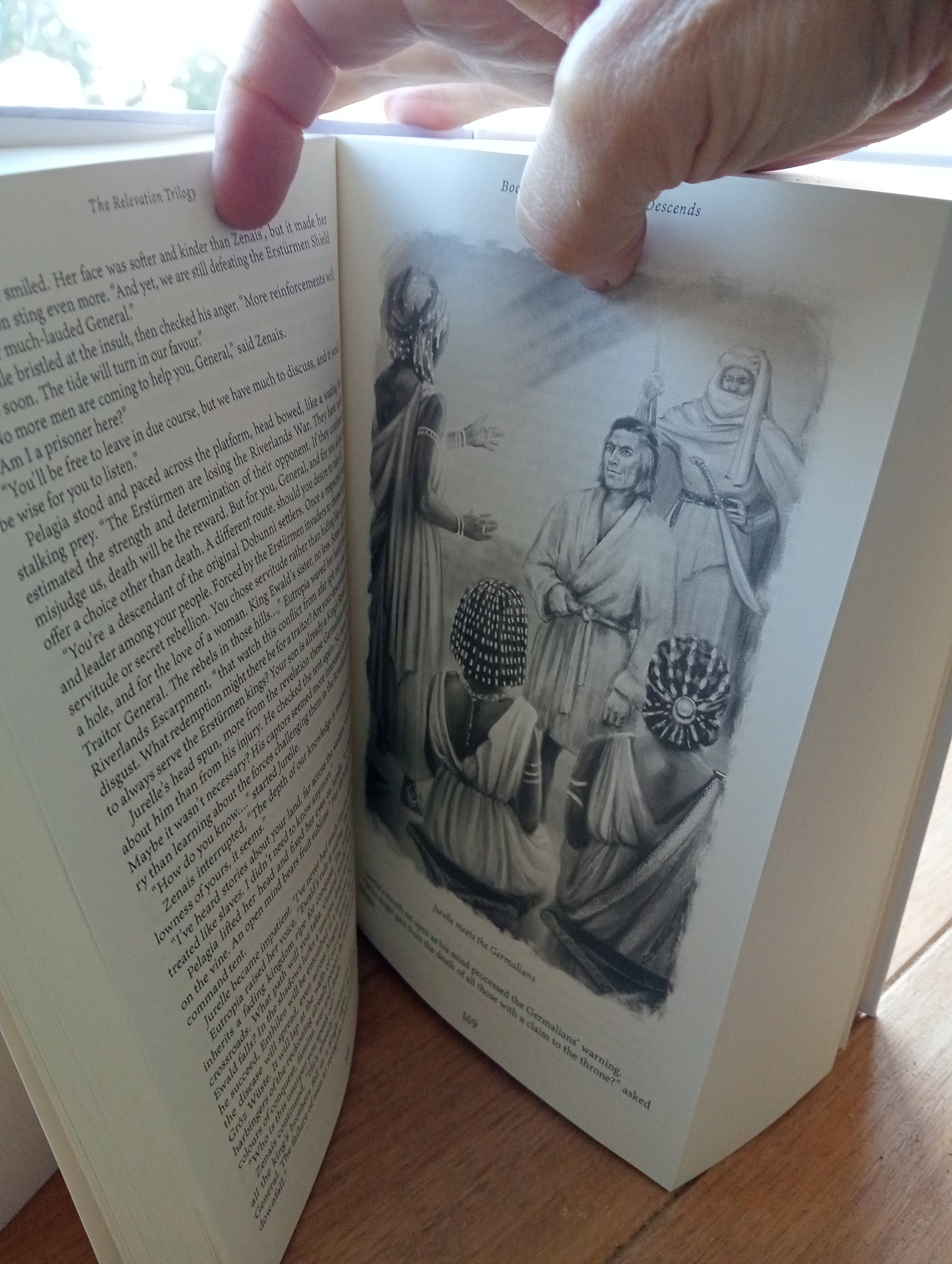
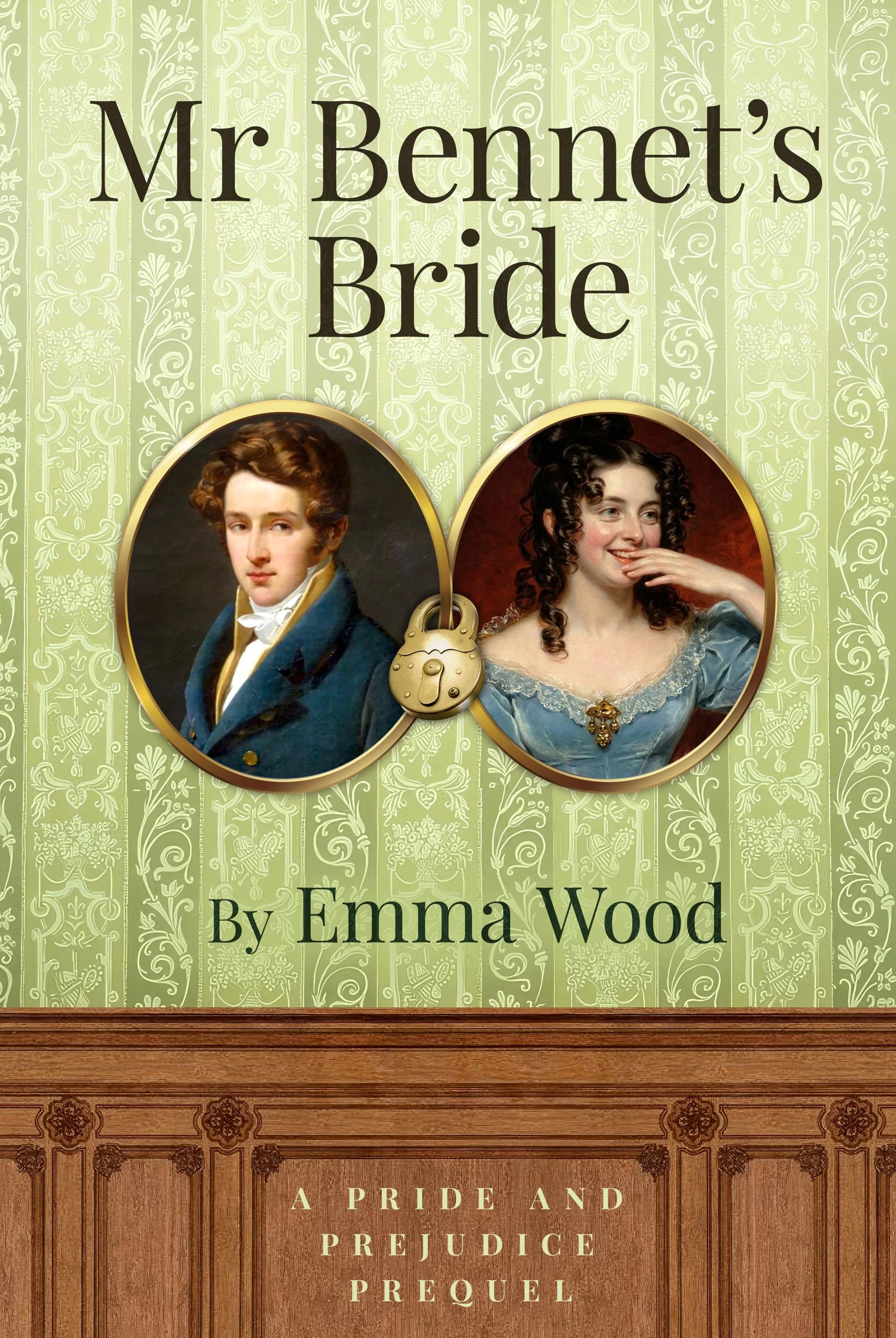
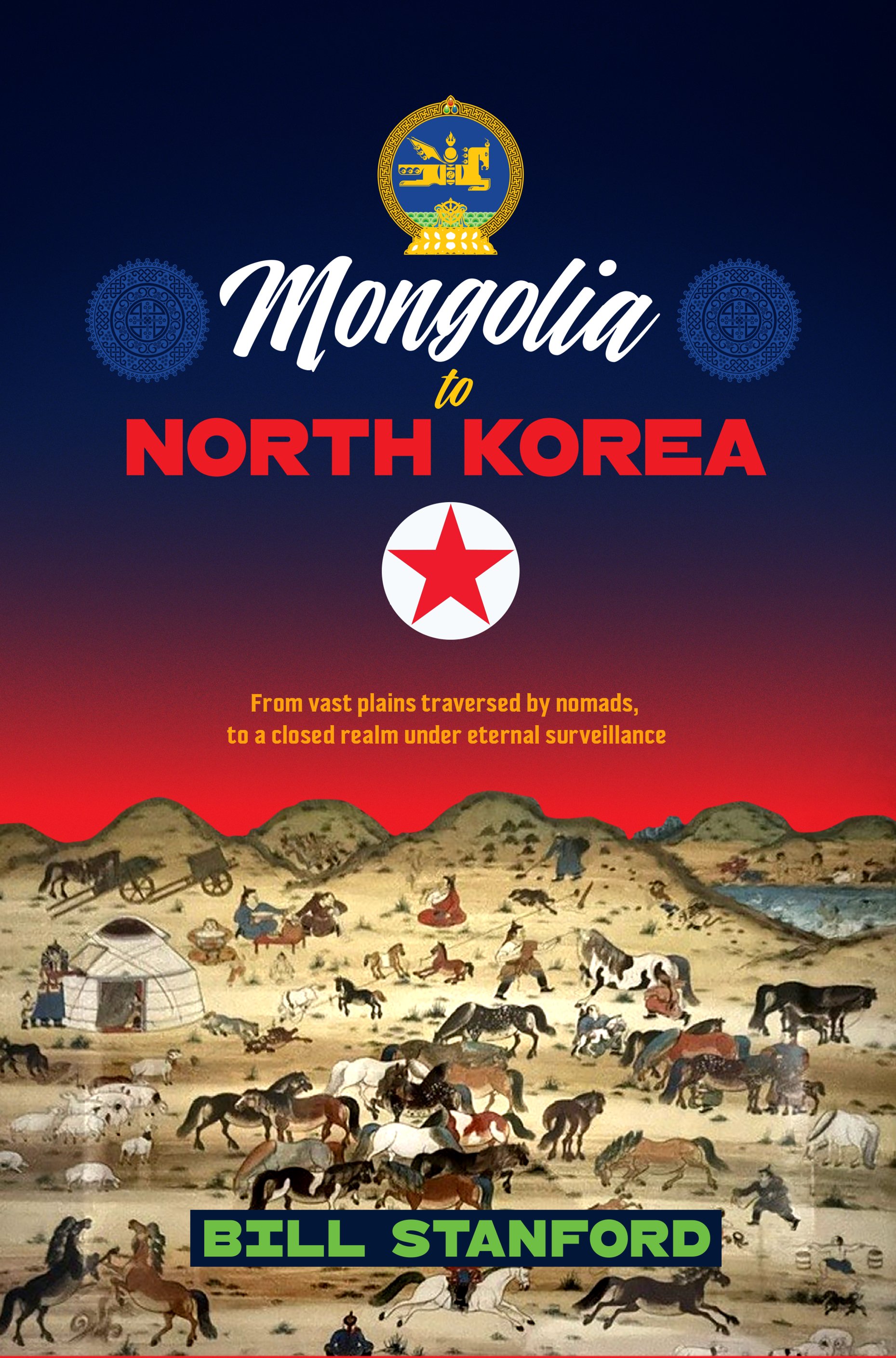
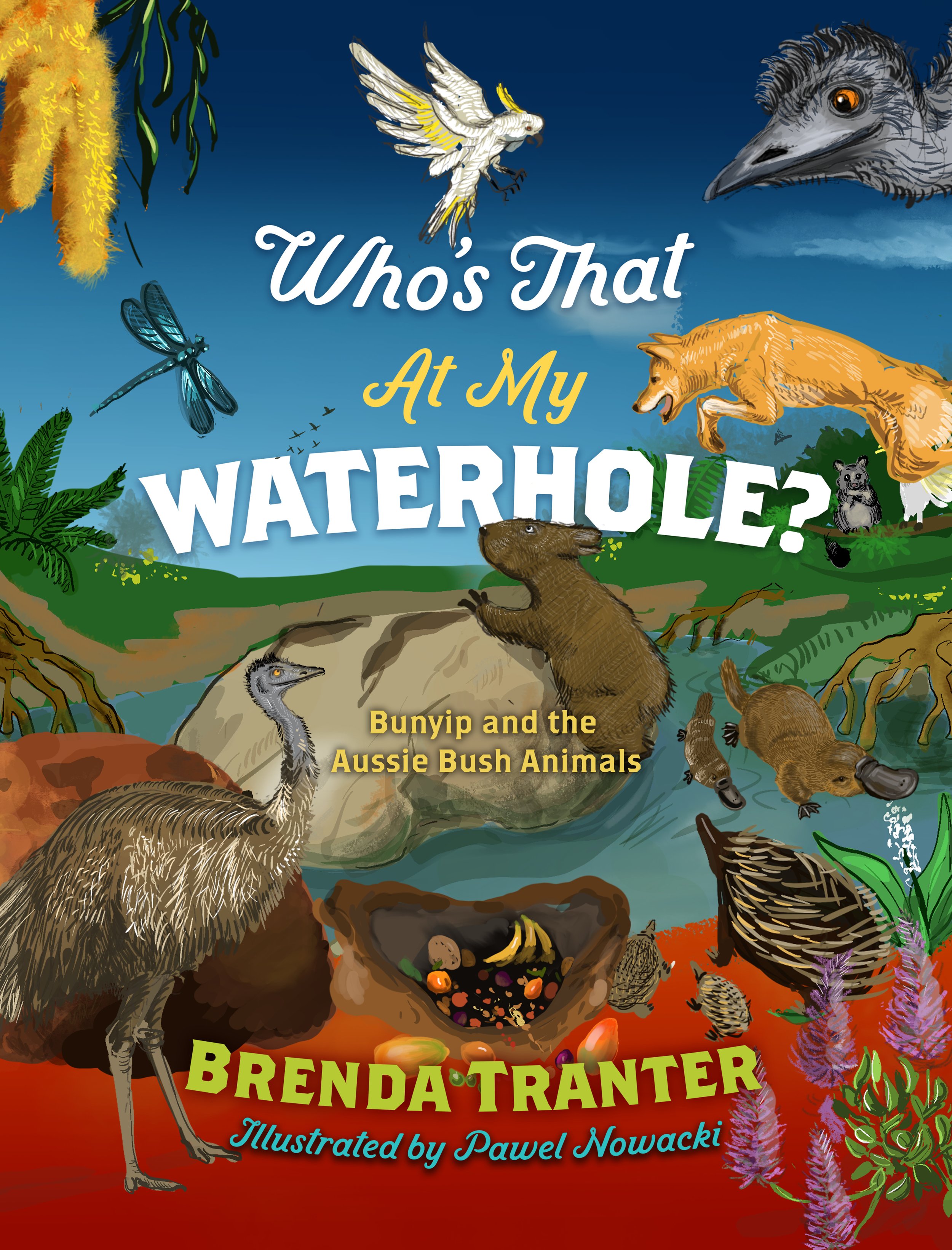
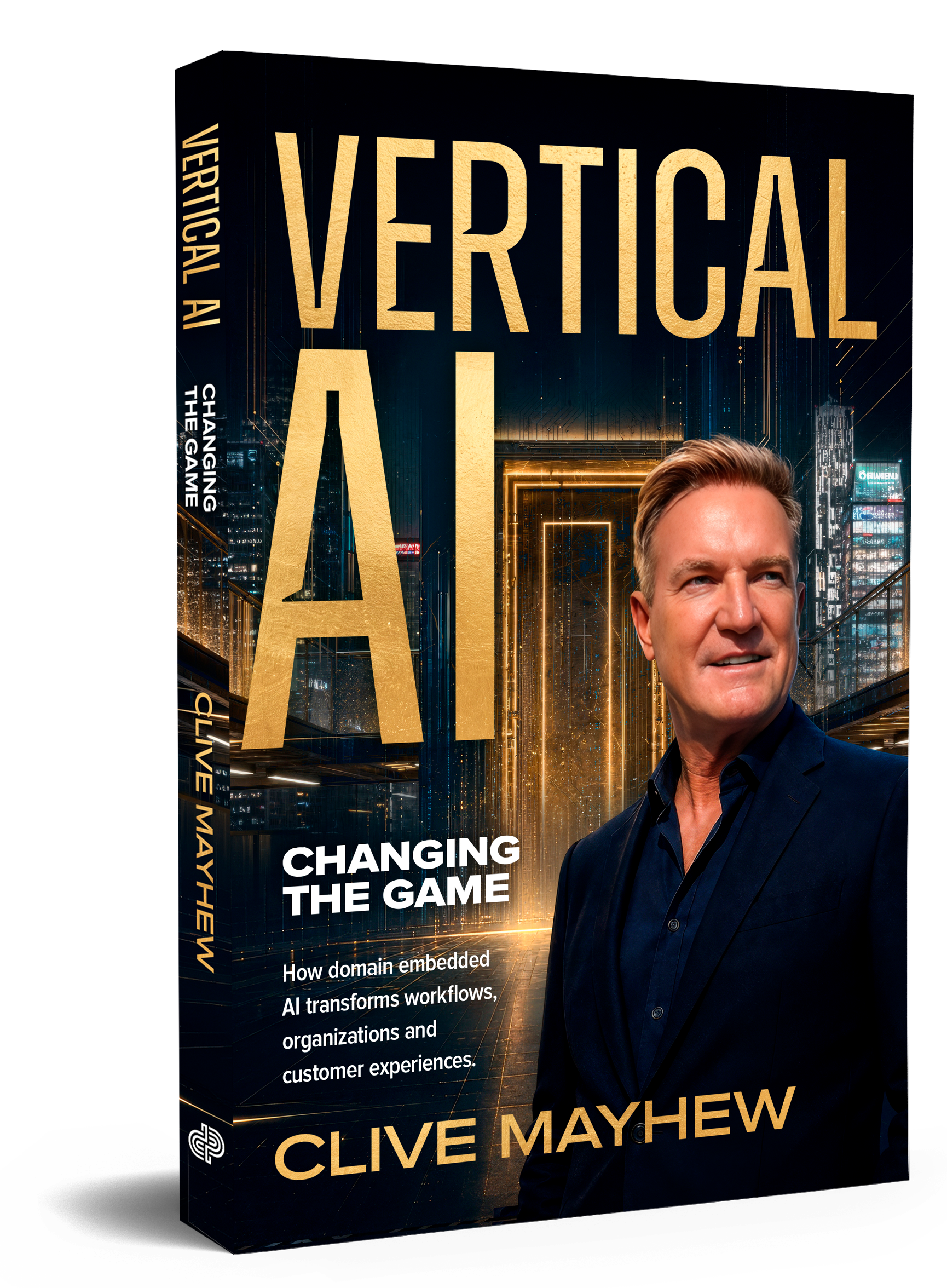
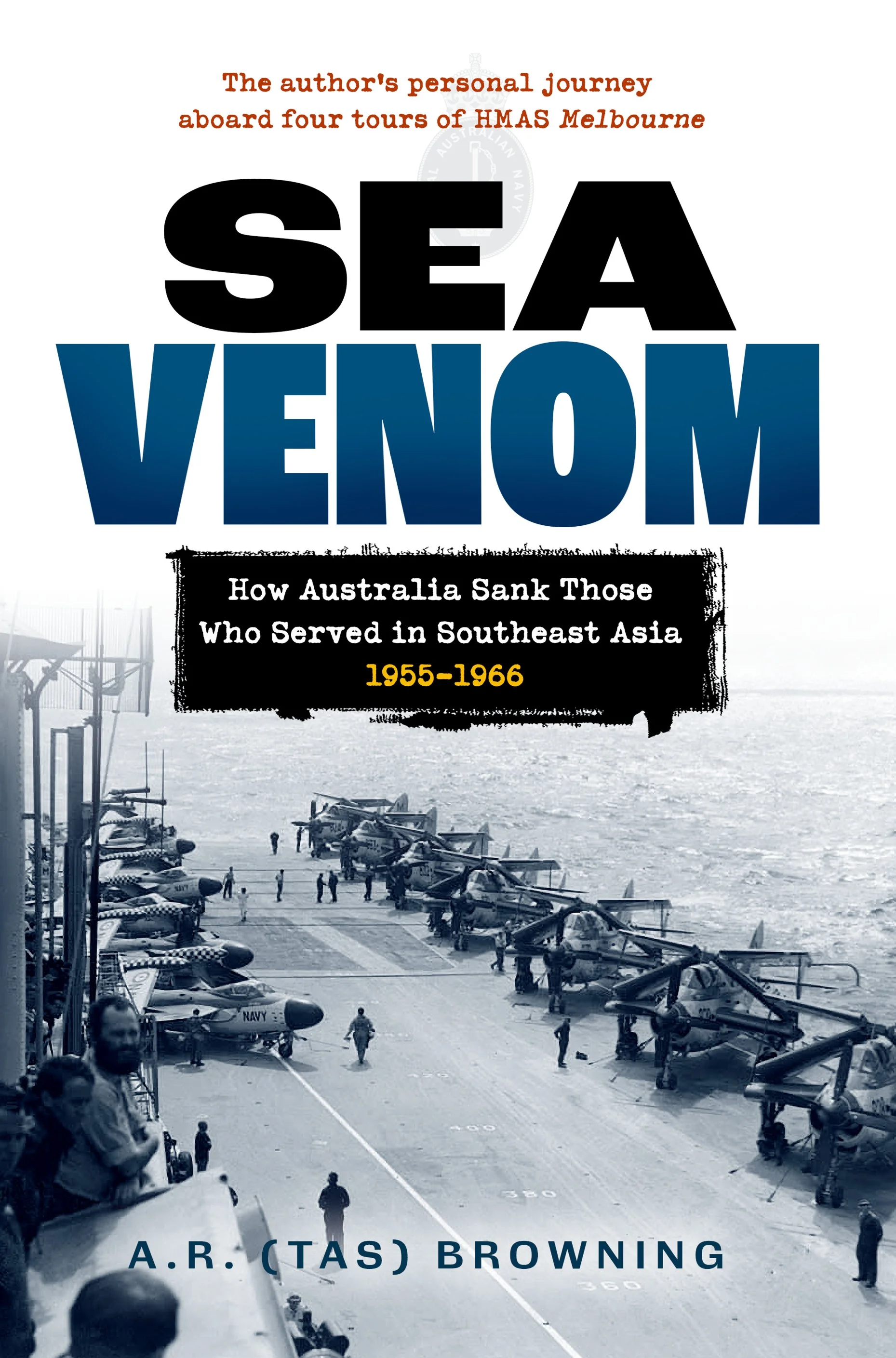
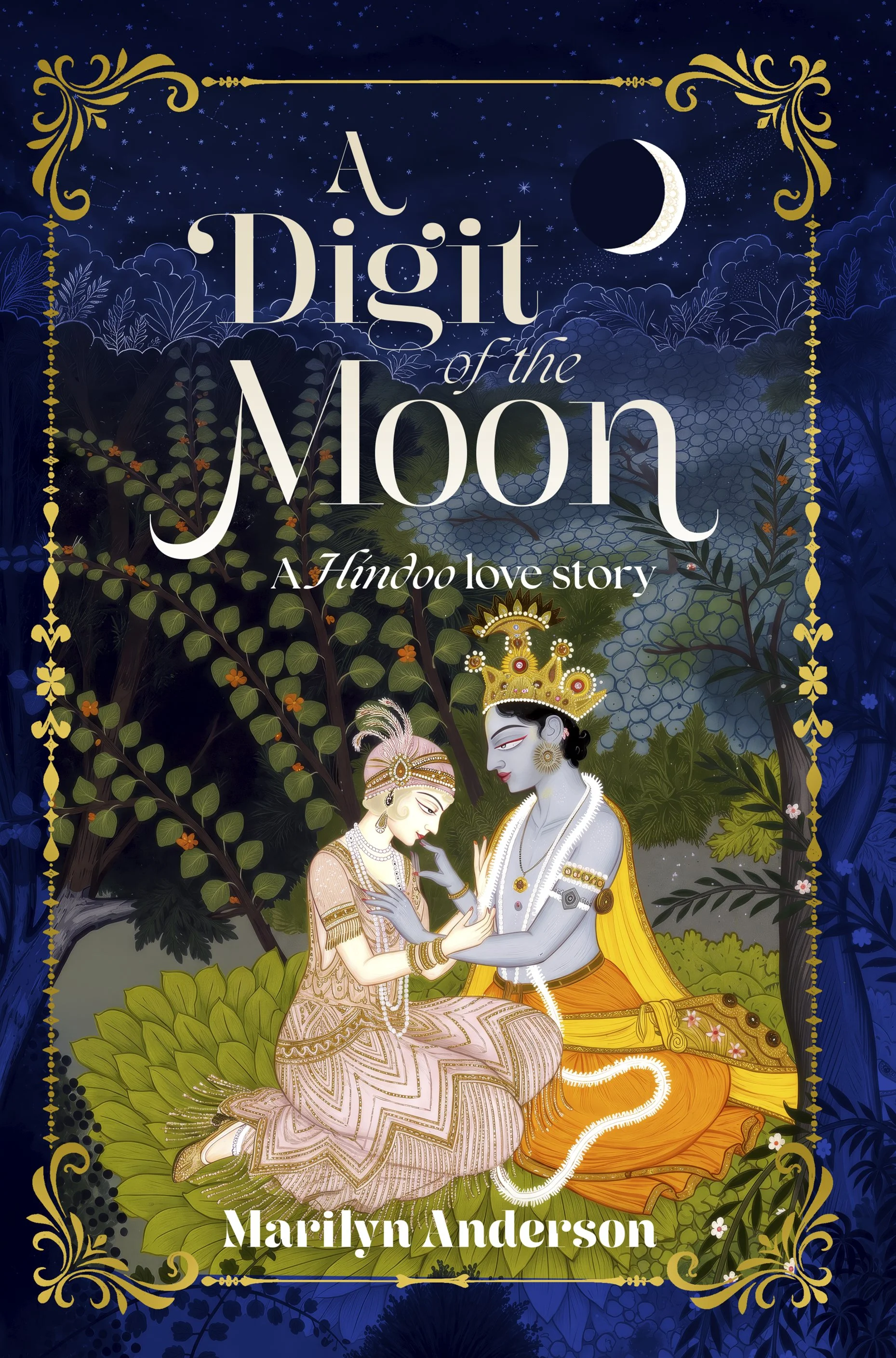
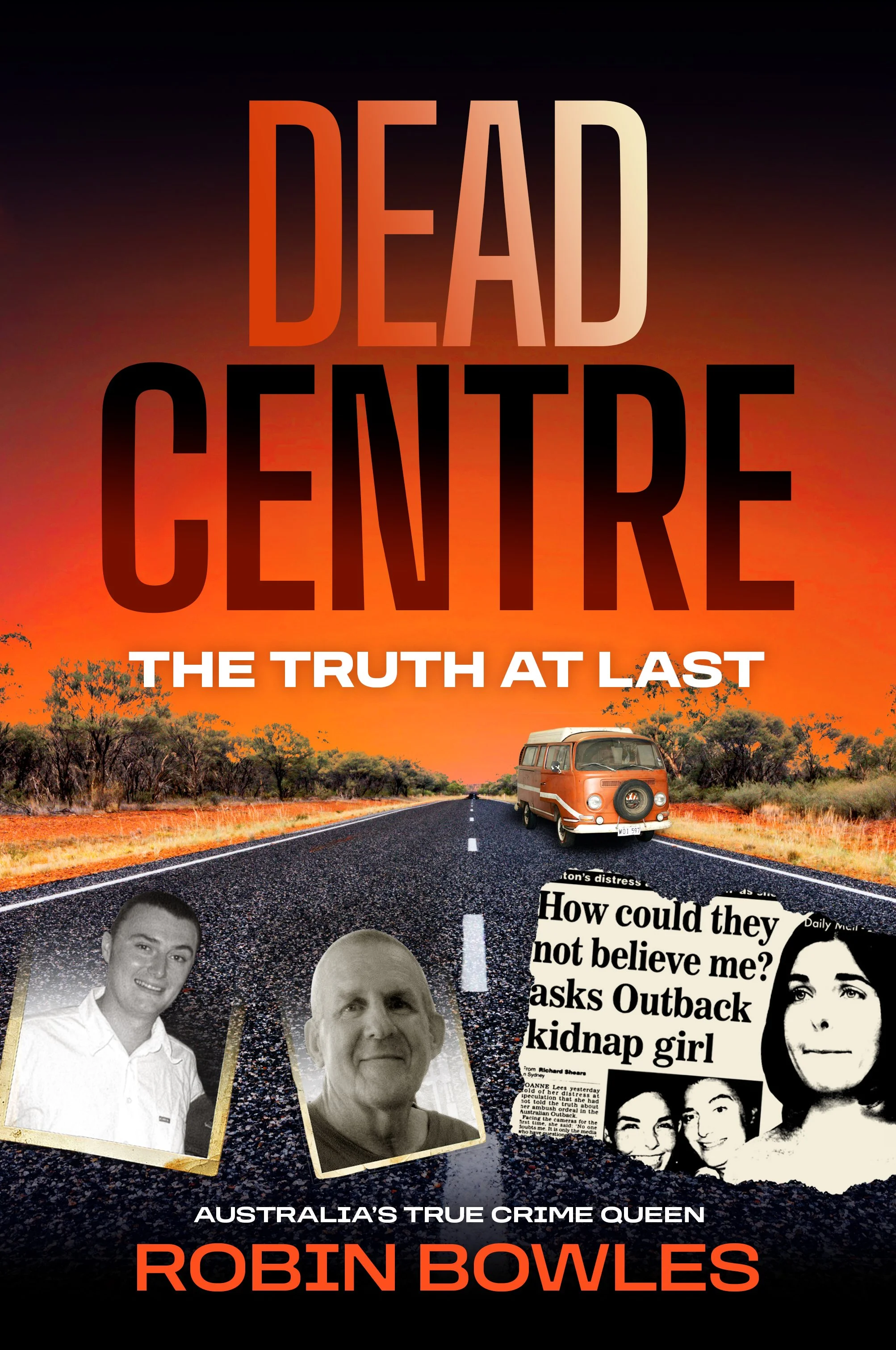
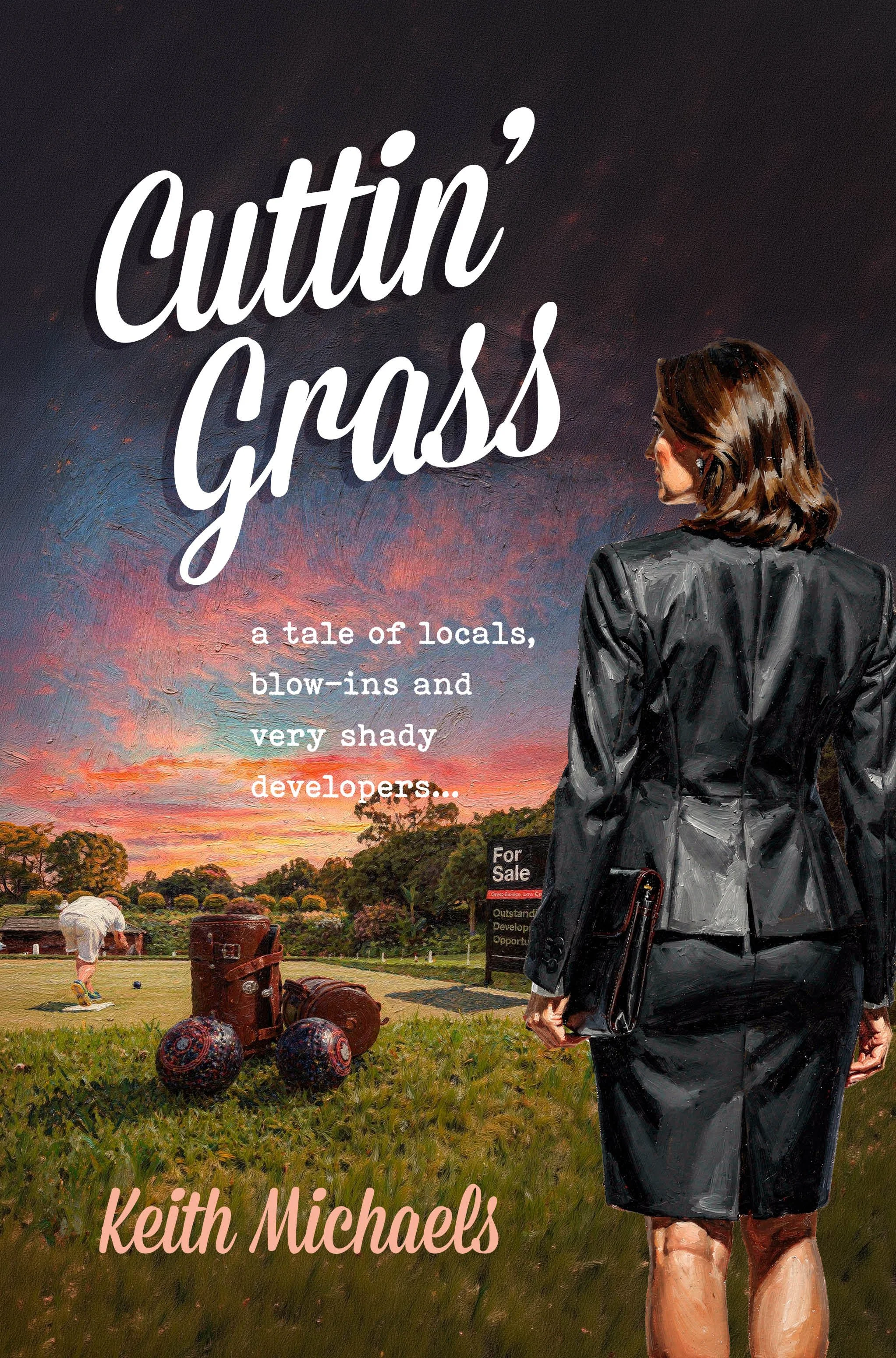
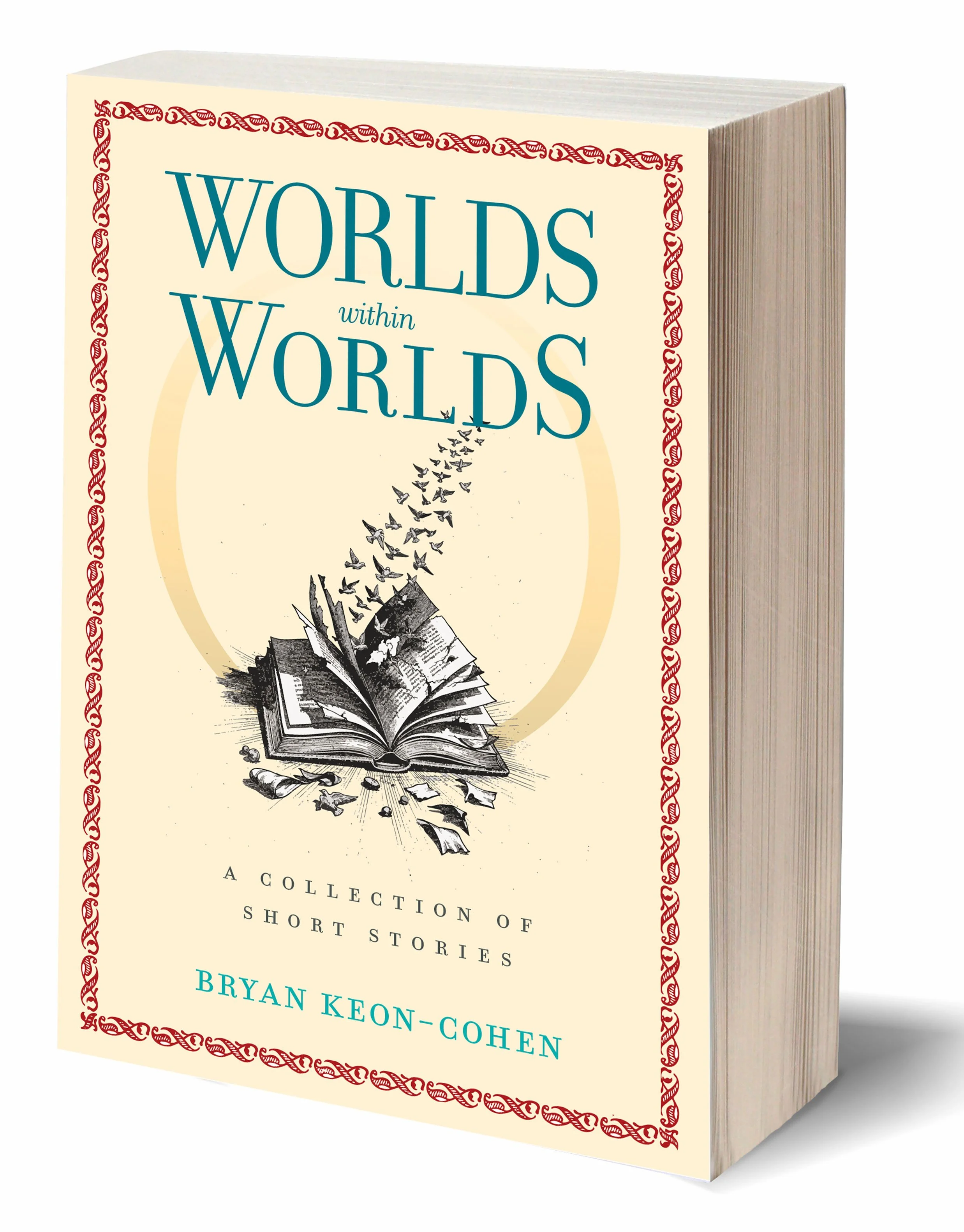
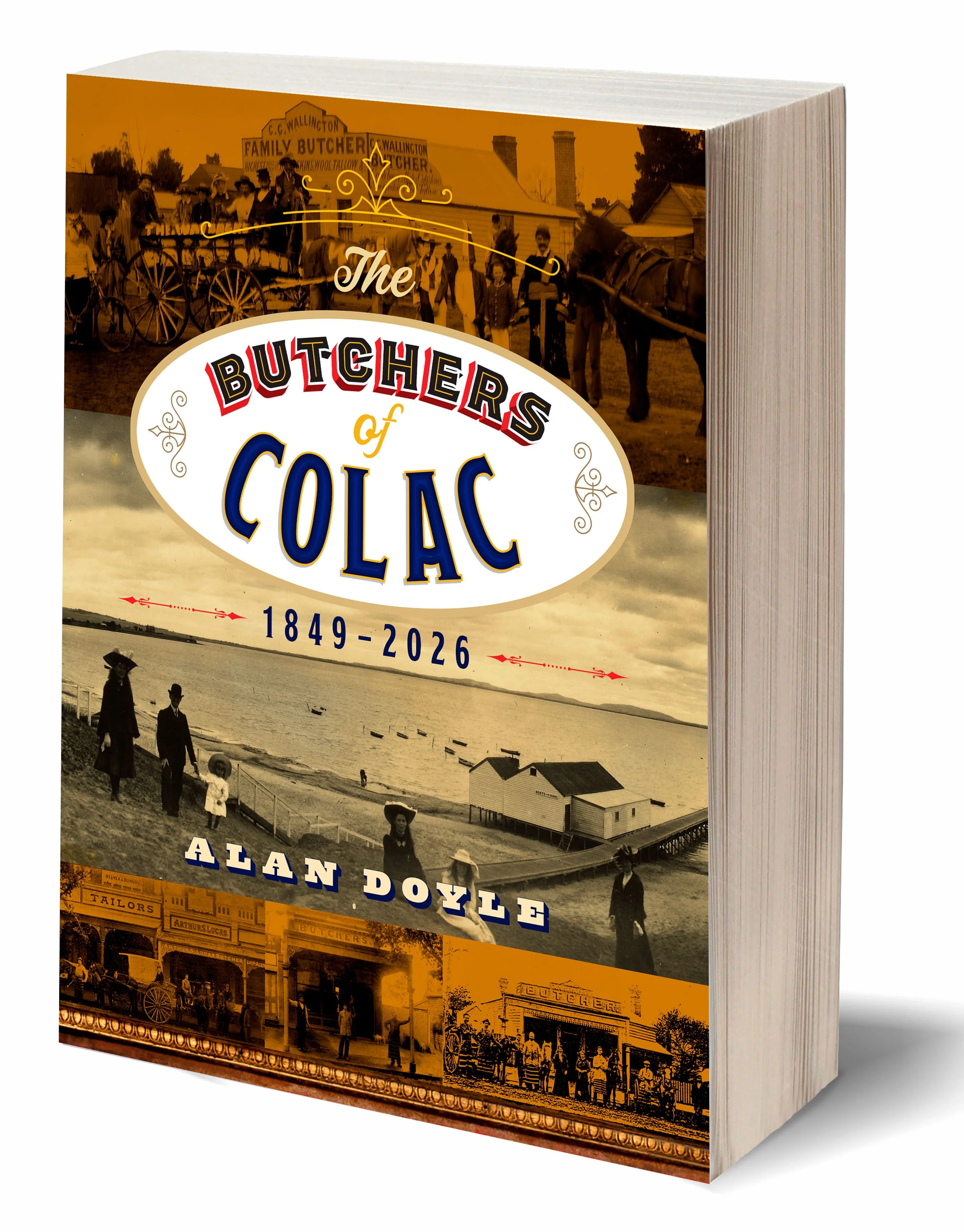
A variety of new cover designs from Working Type Books: from Regency England to True Crime in the Australian outback…
Butchers of Colac Sold Out (for now)
Alan Doyle’s very specific local history has found an enthusiastic audience at a book launch in Colac. The following post is from the Colac and District Family History Group:
𝗙𝗿𝗼𝗺 𝗦𝗮𝘄𝗱𝘂𝘀𝘁 𝗙𝗹𝗼𝗼𝗿𝘀 𝘁𝗼 𝗙𝗮𝗺𝗶𝗹𝘆 𝗦𝘁𝗼𝗿𝗶𝗲𝘀 — 𝗔 𝗪𝗼𝗻𝗱𝗲𝗿𝗳𝘂𝗹 𝗟𝗮𝘂𝗻𝗰𝗵 𝗳𝗼𝗿 𝗕𝘂𝘁𝗰𝗵𝗲𝗿𝘀 𝗼𝗳 𝗖𝗼𝗹𝗮𝗰 𝟭𝟴𝟰𝟵–𝟮𝟬𝟮𝟲
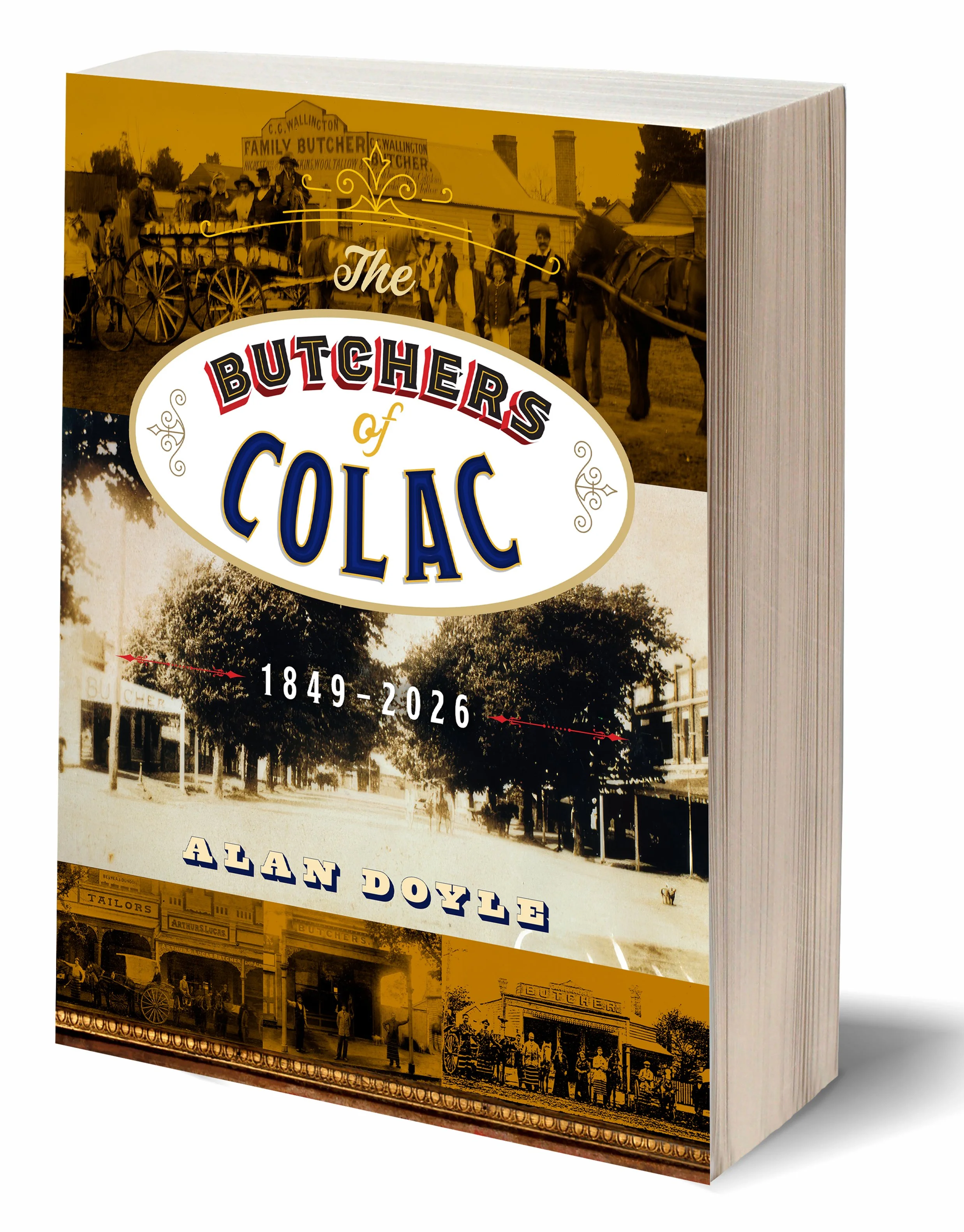
Five years of research, countless phone calls, interviews, photographs and stories… and now the first print run has sold out. More copies of Butchers of Colac 1849–2026 will be available soon.
It was a wonderful afternoon at the History Centre as members, friends, butchers past and present, and their families gathered for the launch of Alan Doyle’s remarkable book.
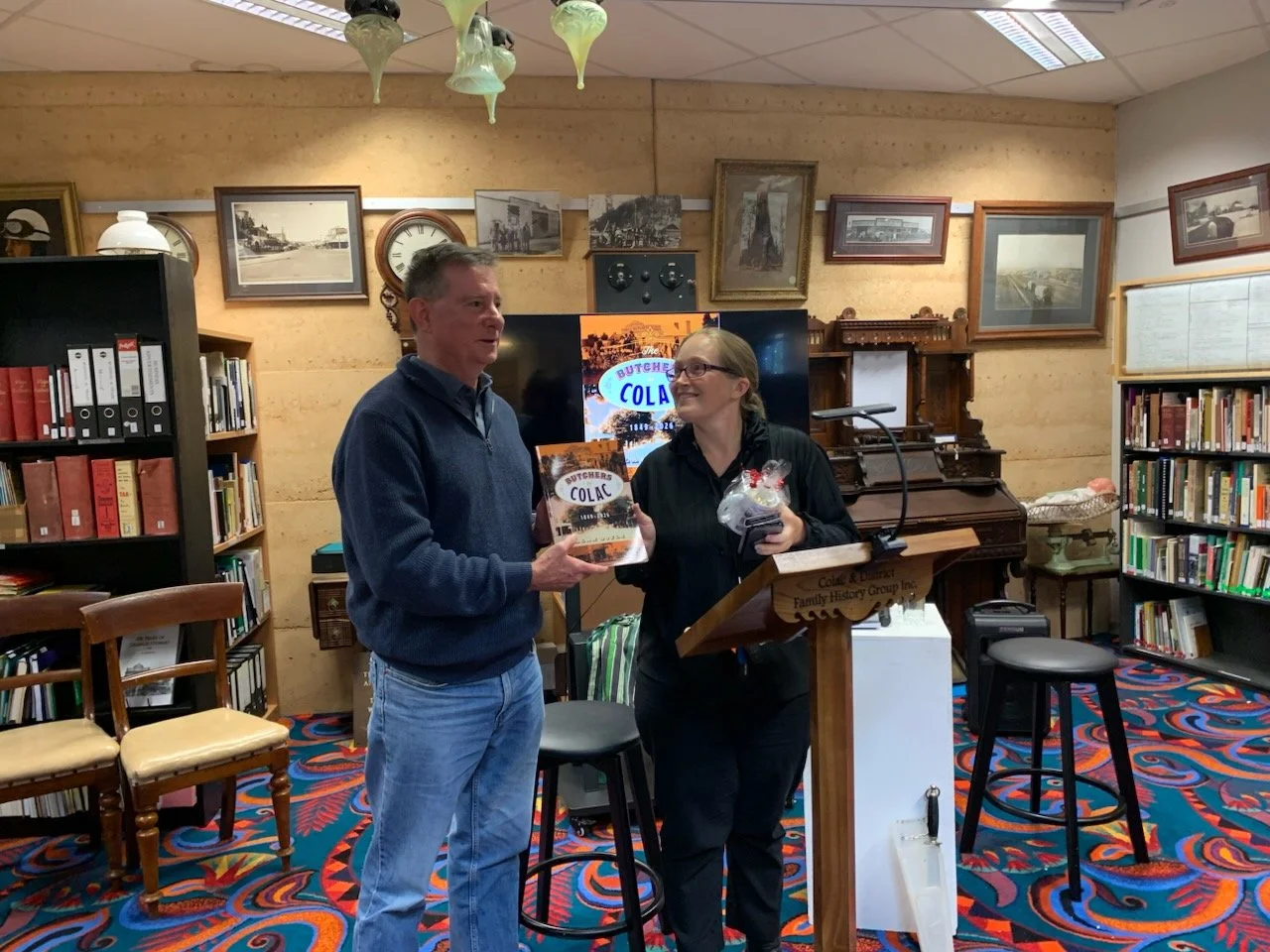
Amy Baudinette, President of the Colac Chamber of Commerce, officially launched the book, speaking warmly about the hard work of small businesses and the importance of preserving local histories before they are lost.
Robyn Currie then joined Alan “In Conversation”, exploring why he chose Colac’s butchers as his subject, the five years of research involved, and the memorable stories uncovered along the way.
Over afternoon tea, memories came flooding back — the sawdust on the floor, the worn chopping block, the butcher rhythmically sharpening his knives while carrying on a conversation, then the familiar clang and rattle as they dropped back into the metal pouch at his waist.
More than just a history of butcher shops, this beautiful book captures the people, personalities and traditions that shaped Colac for generations.
Photographs: Alan Doyle and Robyn Currie "in conversation" discuss the process of researching and writing the book
Amy Baudinette, President Colac Chamber of Commerce - officially launches the book
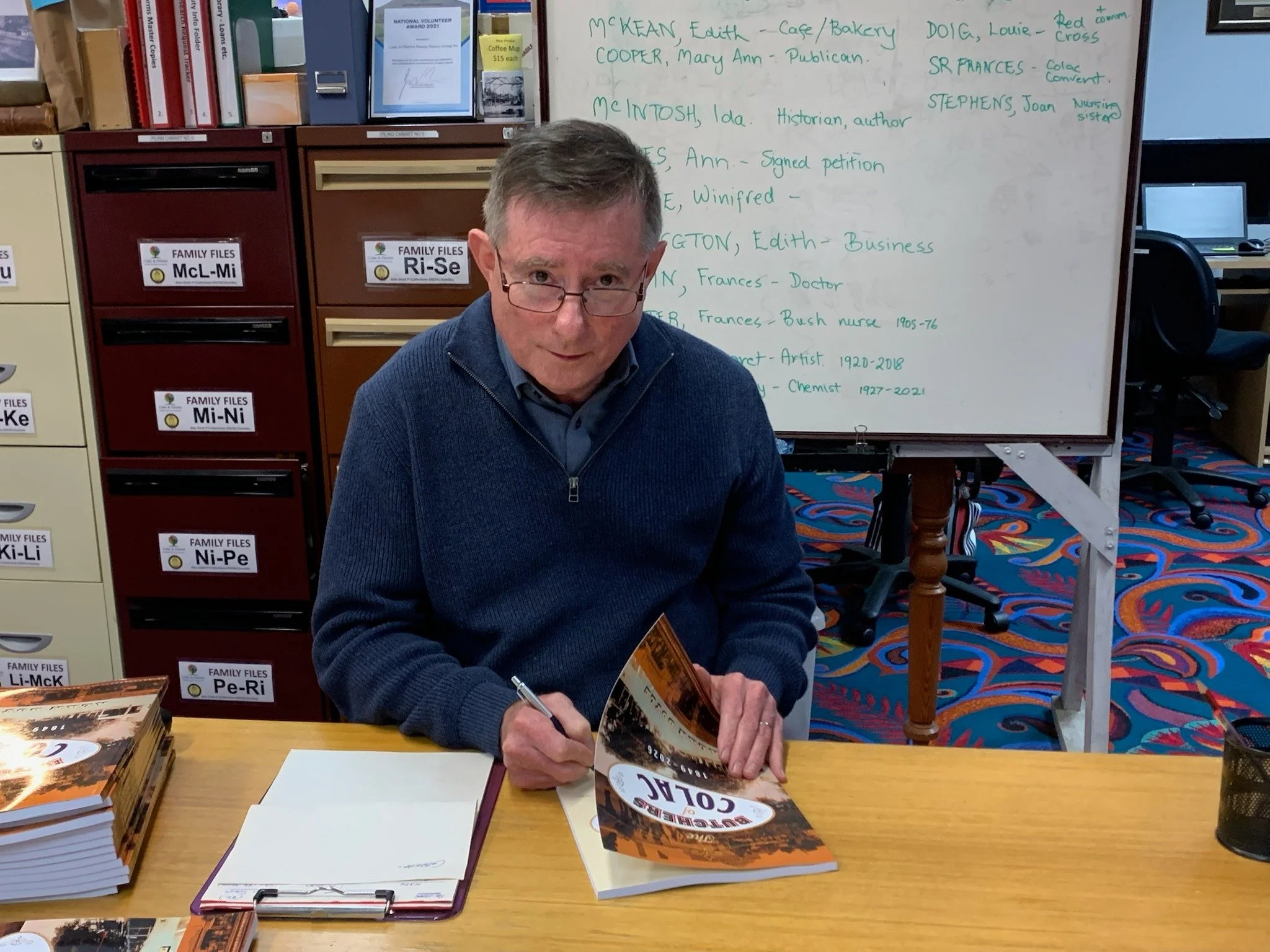
Alan signing one of the last copies of his book. If you missed out the good news is that there are going to be more books printed.
Recent Design Work
A few new covers, spanning a range of genres, colour schemes and type selections…
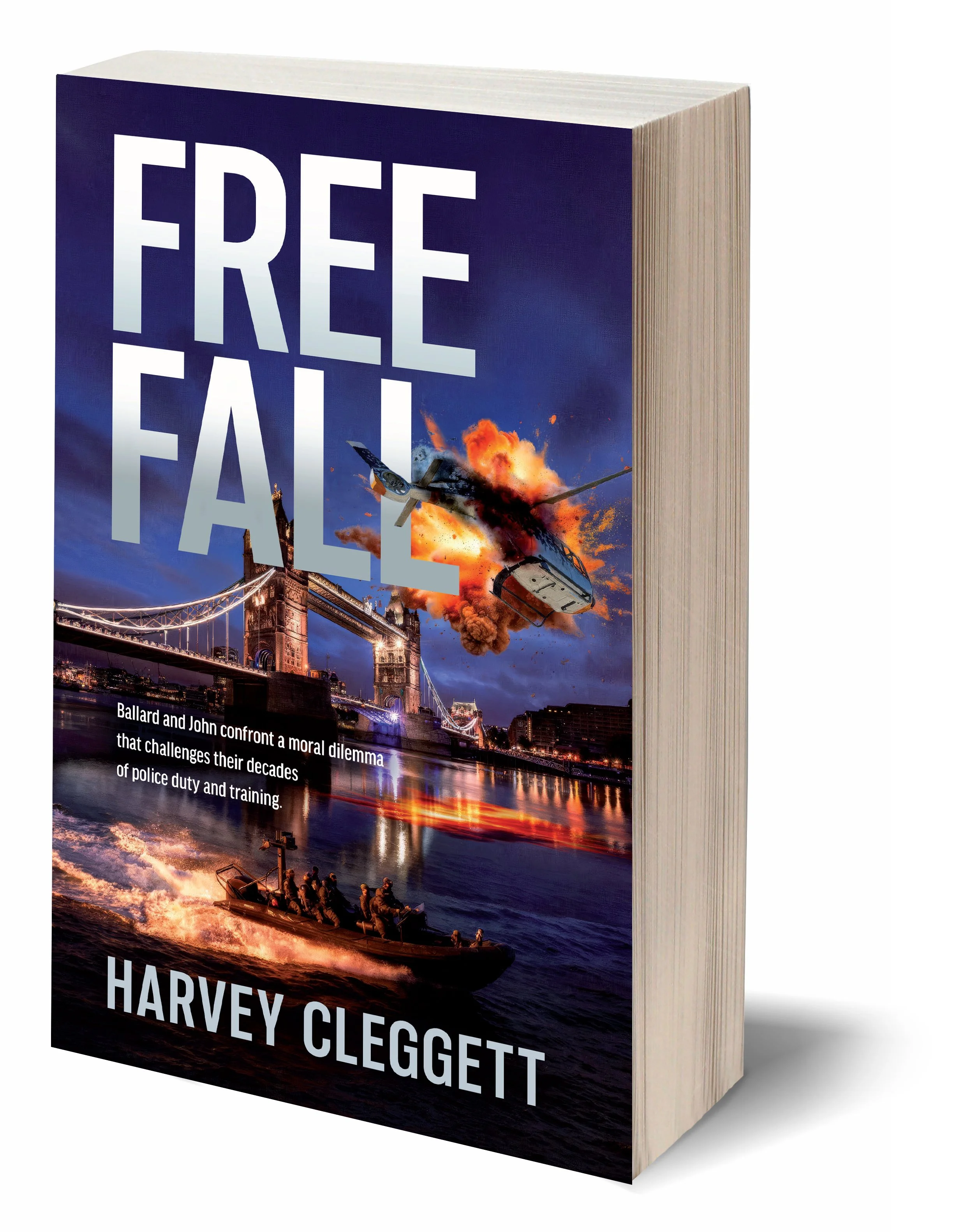
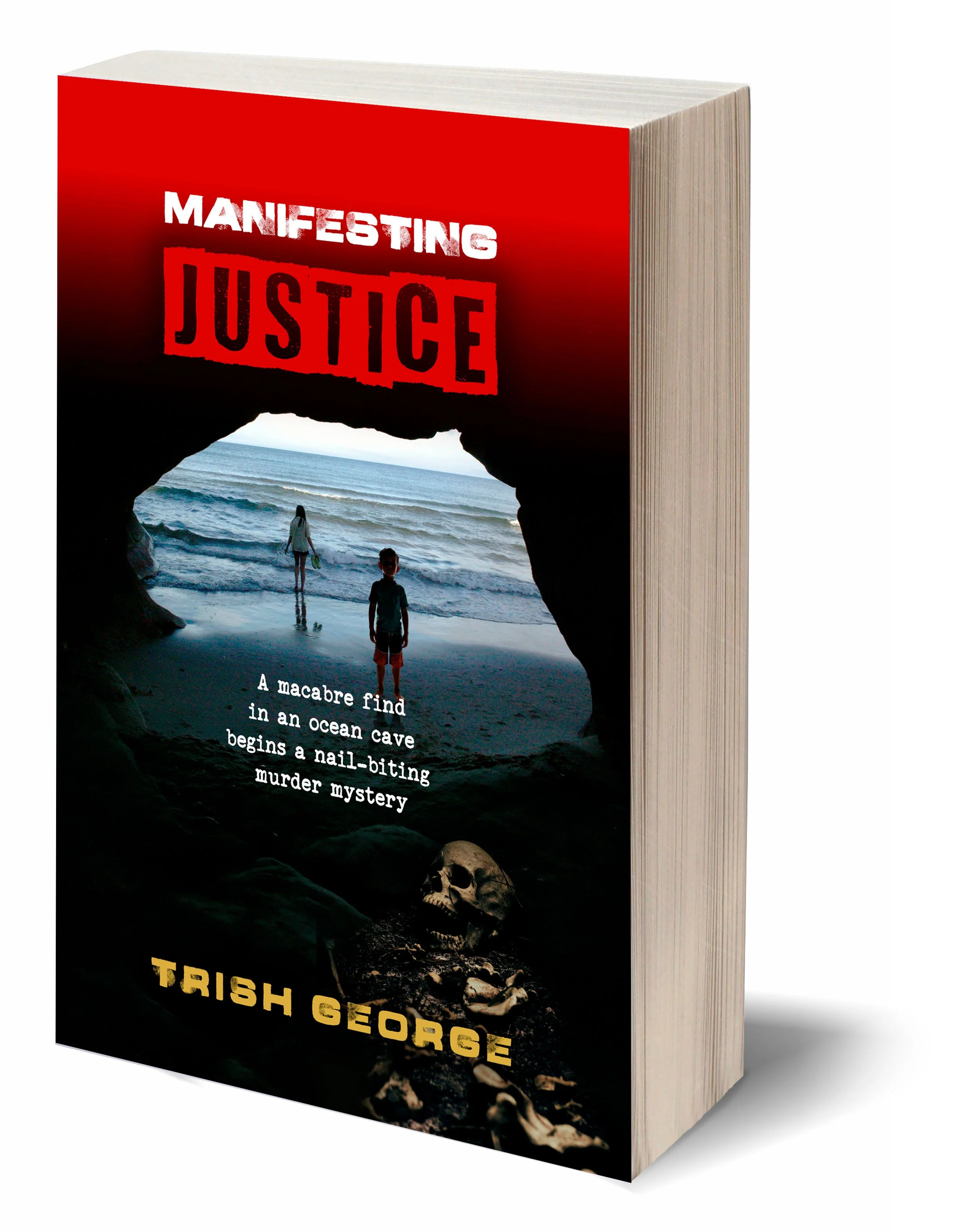
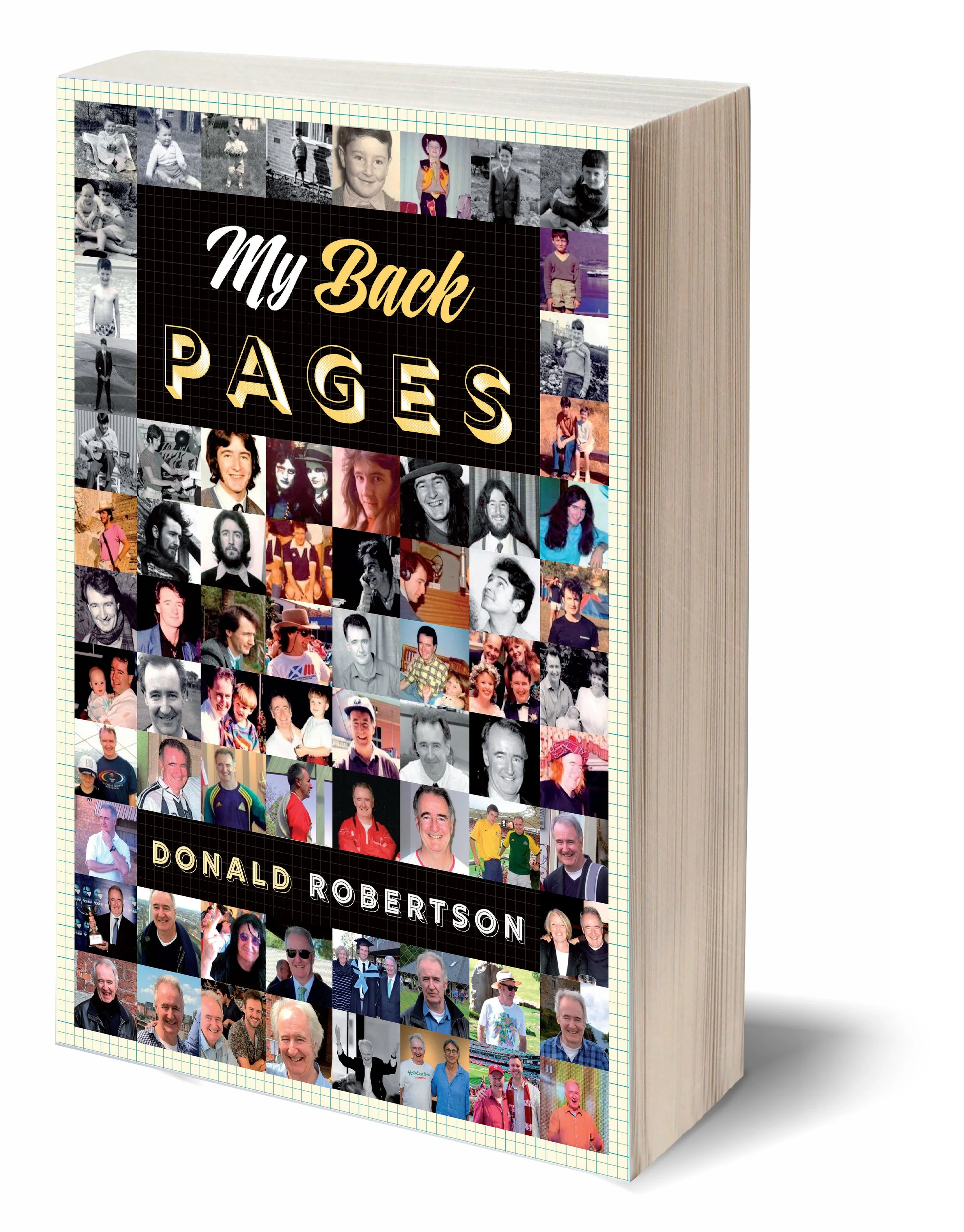
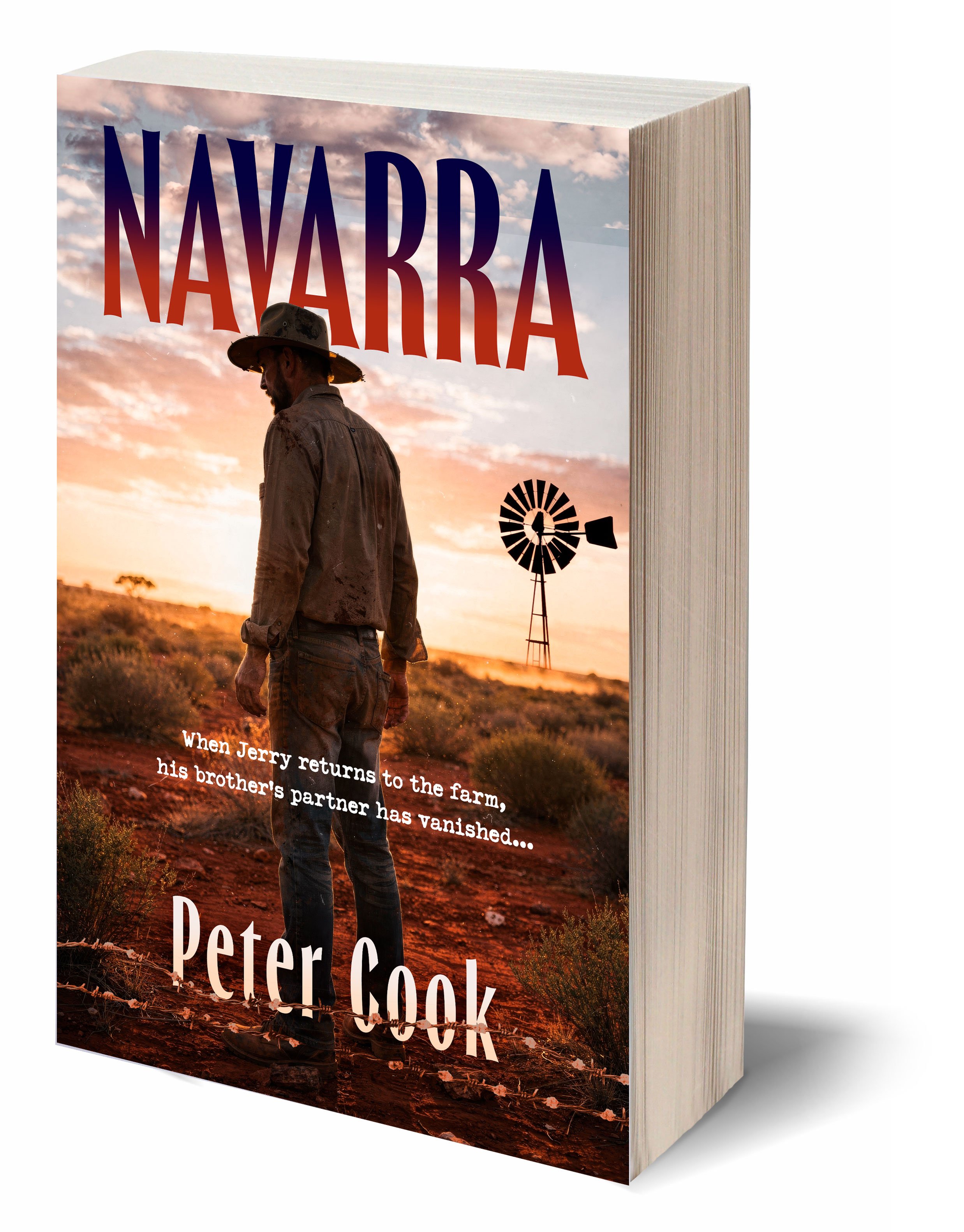
Sarah Martin's Author Website
If you’re new to Sarah Martin’s writing, her new website is the perfect introduction.
Sarah writes across a range of genres and age groups, but what ties all of her work together is heart — stories about people, belonging, resilience, friendship, and the natural world.
It’s a beautiful new online home for her books and writing life.
Visit: sarahmartinwriter.com
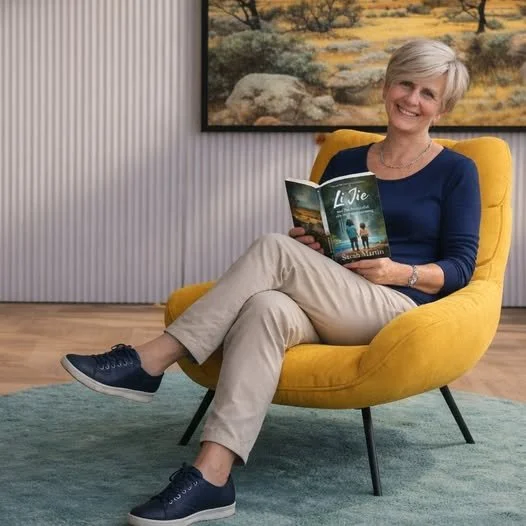
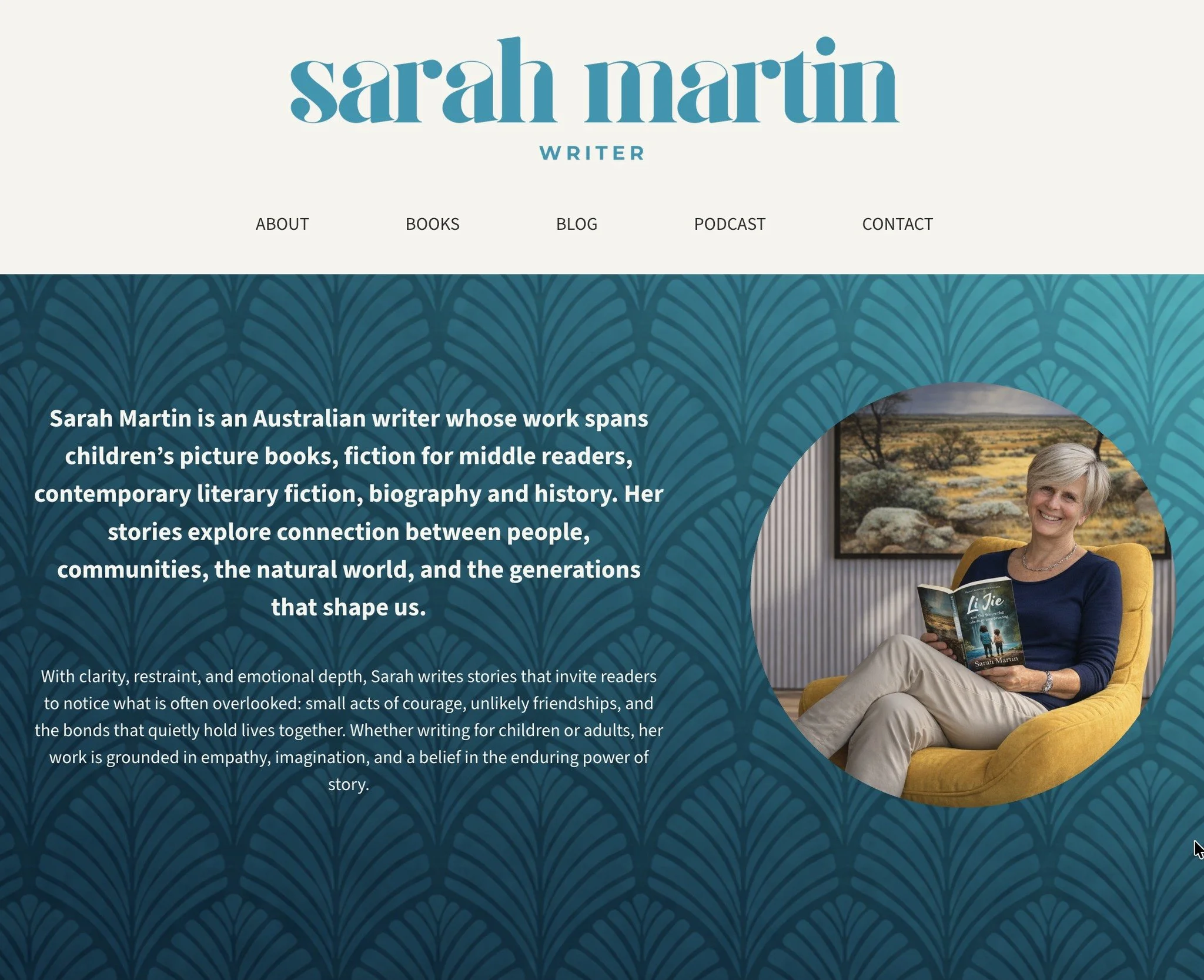
Beautifully designed by Michael Brimelow.
How to Rescue an Overhydrated Book...
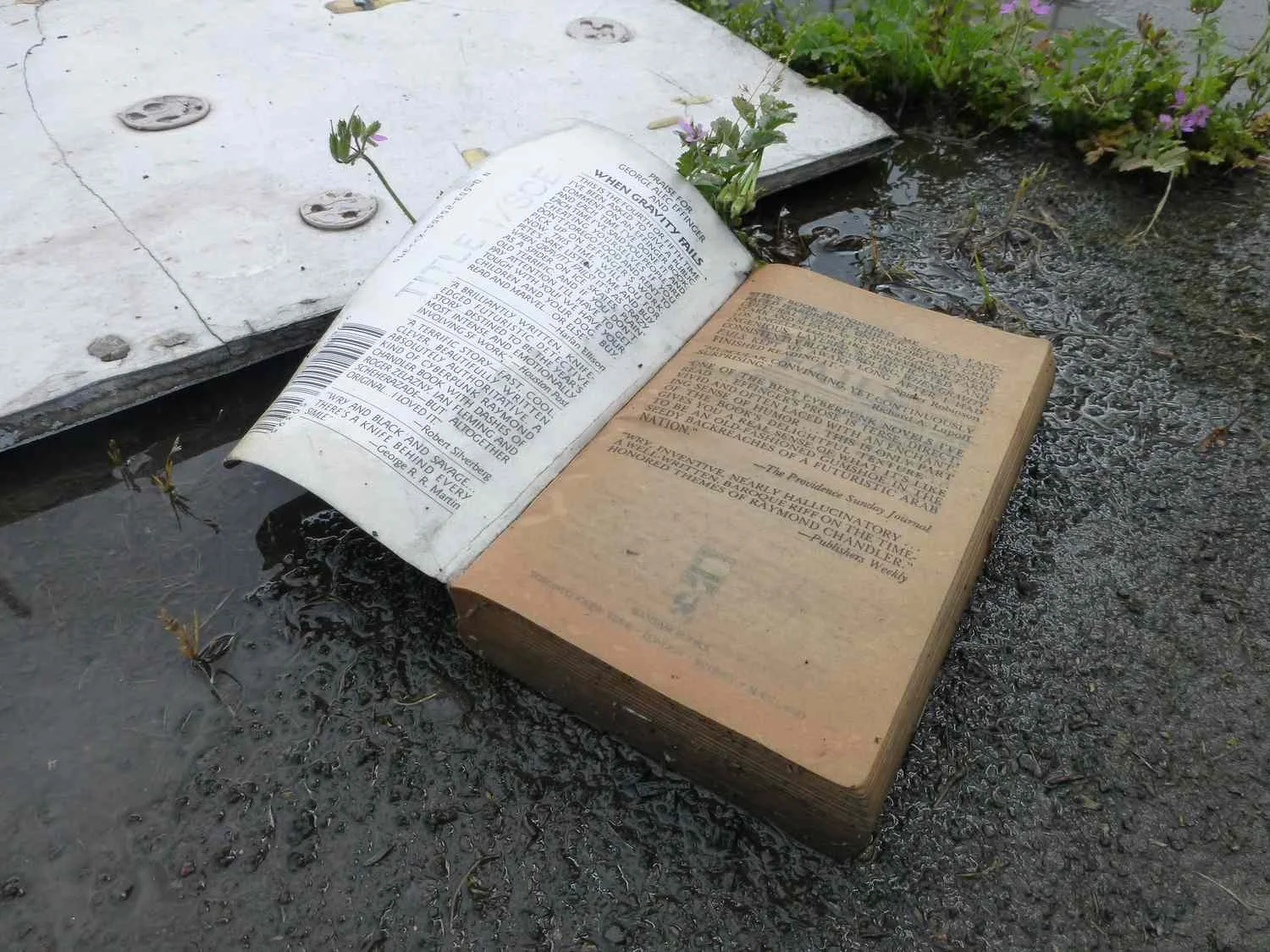
Did you leave a favourite book on a table outside, only for a passing shower to turn it into a soggy mess? Despair not — a few simple steps can return your beloved tome to its previous dehydrated state… The State Library of NSW has posted a more detailed procedure.
Service Above and Beyond with Tenderprint
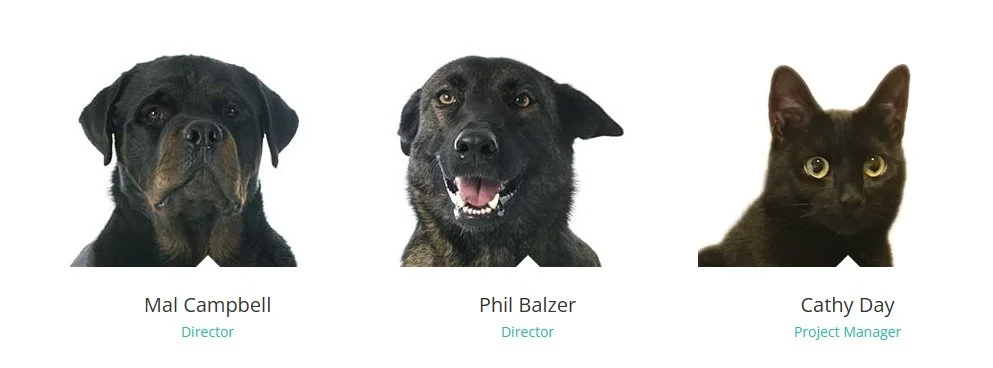
Taken from website, may not be an accurate depiction of Tenderprint staff…
Ganga Powell needed her book for a launch in Port Fairy. Mal from Tenderprint went somewhat more than the extra mile — he drove all the way from Melbourne to Port Fairy with Ganga’s books, handed them over and drove back to Melbourne. All for no extra charge. You know you are in good hands when you have a printer willing to do that!
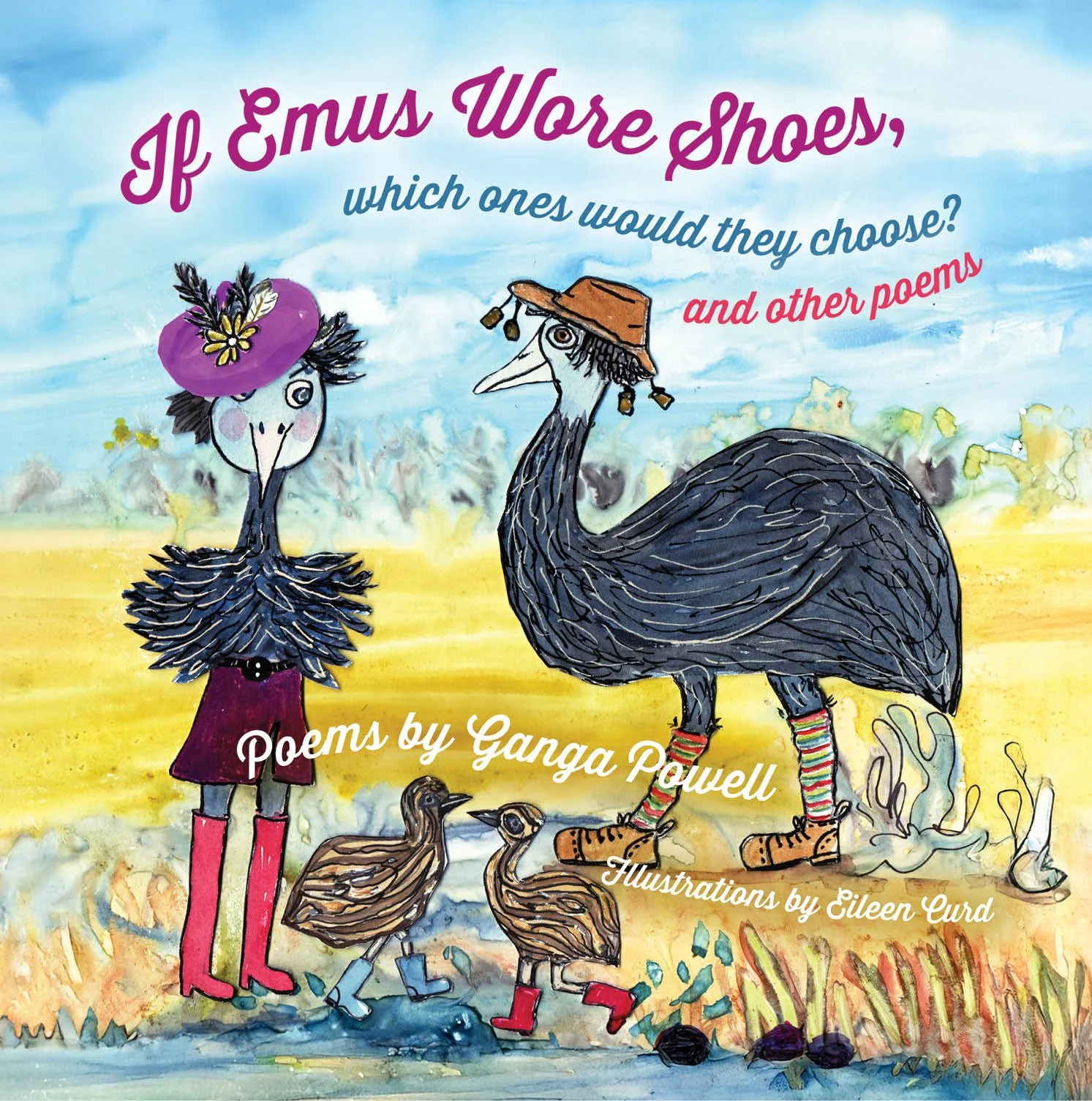
Recent Cover Design Work
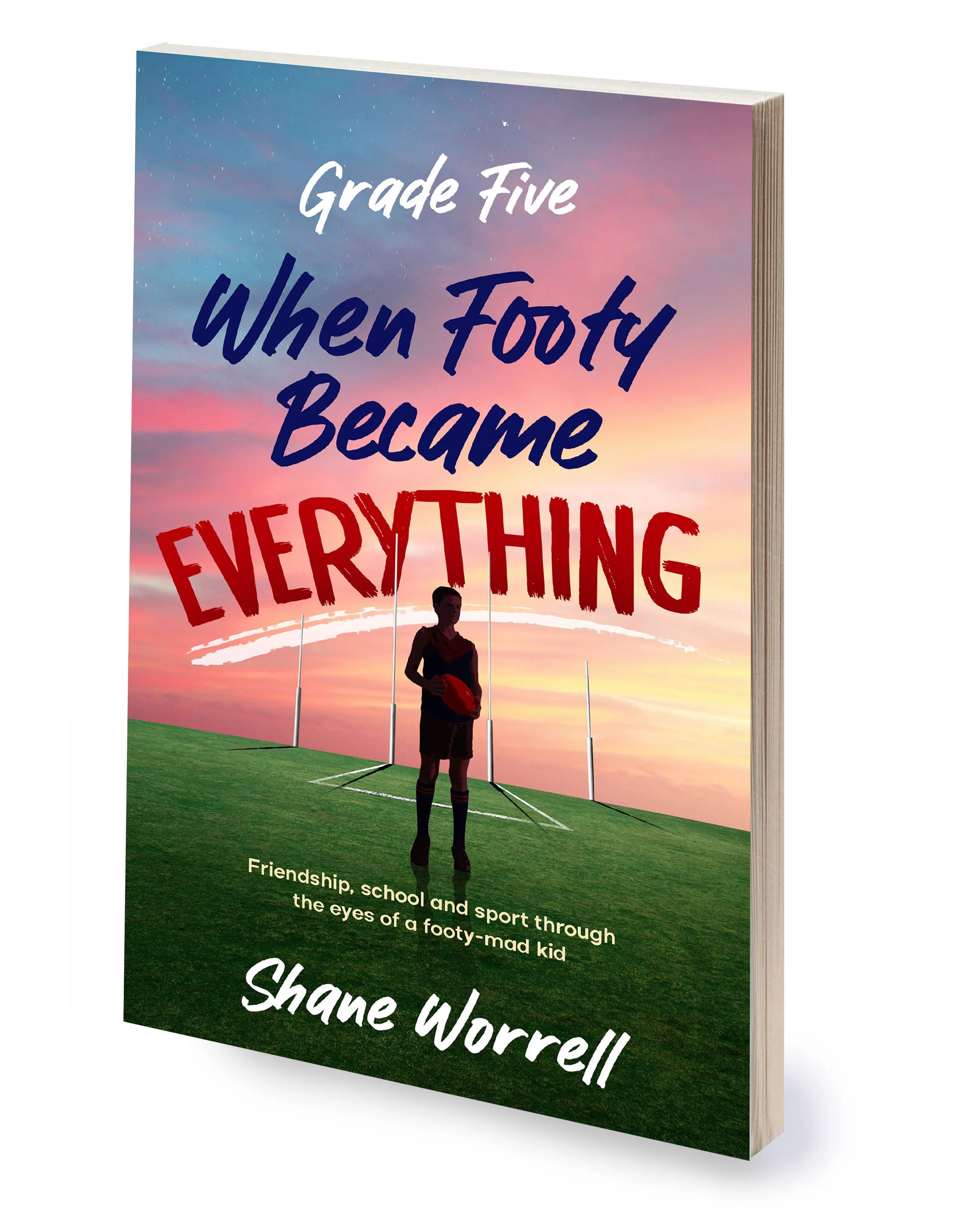
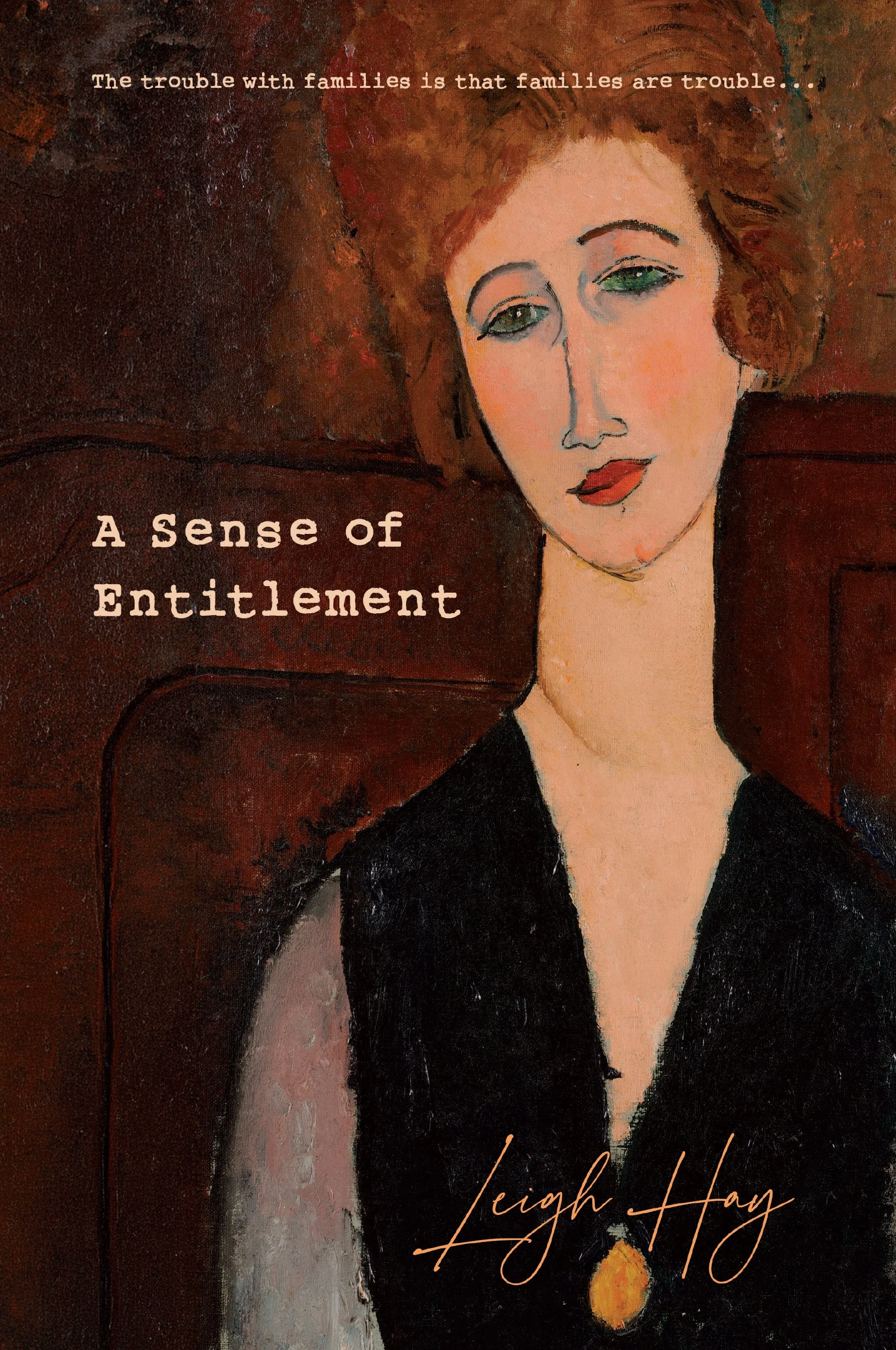
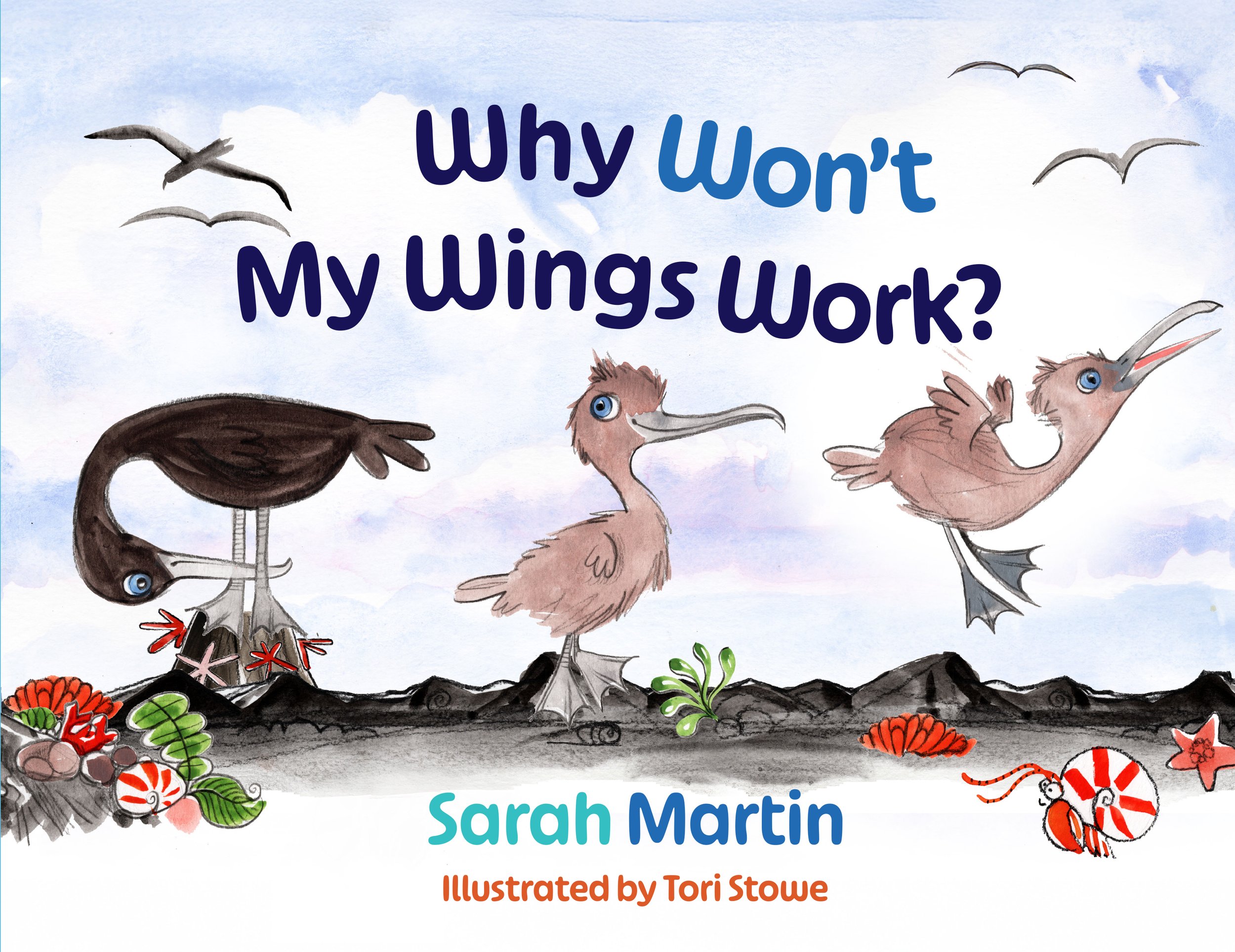
A small selection of recent cover designs, with the usual variety of subject matter.

Aegean Odyssey Review
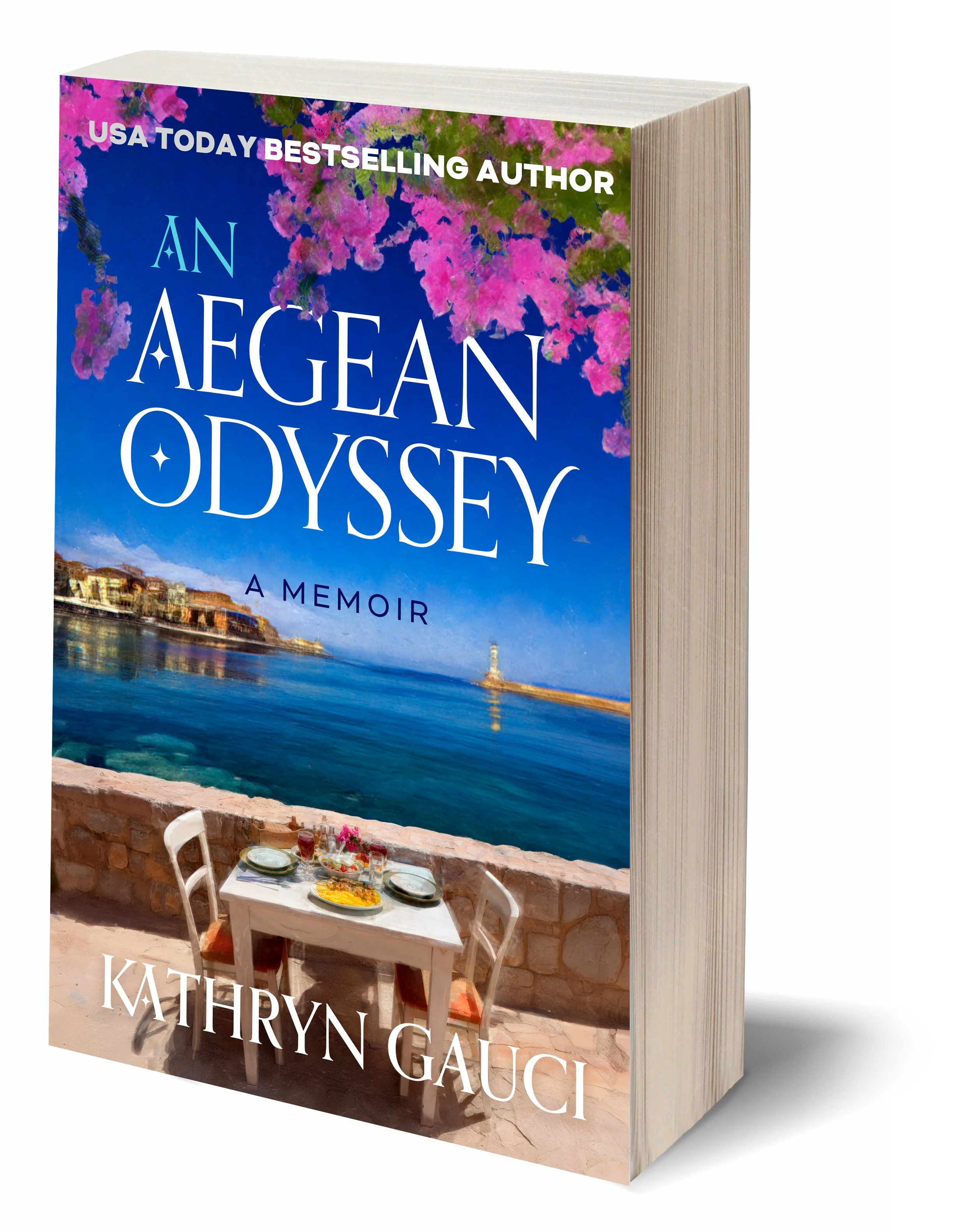
Kathryn Gauci’s excellent memoir garners well-deserved praise online:
A review that absolutely made my day on Amazon and Goodreads. I have to share it with you. Thank you so much, Abzorba the Greek.
October 28, 2025
I’ve just finished Kathryn Gauci’s very personal memoir, and I’m slightly annoyed with her because it’s not longer. I’ve been so immersed in her self-awakening solo trip back to Greece after many years away that I didn’t want it to end so soon. I suppose that you’ll probably get more out of this book if, like me, you’re a hopeless Grecophile, but if you like travel writing in general, you’d better not pass this one up anyway.
Kathryn wasn’t sure she wanted to make this trip alone, since she had a perfectly good marriage, but, owing to circumstances, she went ahead anyway. Right at the very end of the book she makes a really valid point about travelling solo that I’ve often thought too, although never been able to put it into words. When you experience something on your own, it’s an entirely different thing from how it would be if accompanied by someone else, in this case, her husband. You meet people, experience feelings and emotions, see places in ways that wouldn’t be the same with someone beside you. It’s not better, it’s not worse, it’s simply different, but in such a way that you realise how much it enriches your life. If you can do it, then it’s 100% worthwhile.
Kathryn goes to places (islands, mainly) that I know well myself, so maybe that too, made her writings resonate more deeply with me. But if you’ve any experience at all of Greek people and culture, then surely you’ll also find this work totally absorbing. She has a wonderful gift for evoking in you mental pictures of the places she’s describing, the people she’s interacting with.
Kathryn Gauci is a living treasure that all avid book readers would do well to appreciate.
https://www.amazon.co.uk/.../ref=cm_cr_arp_d_rvw_ttl...
#memoirssetingreece #honorarygreek #windycitygreek #greekmemoirs #memoirs #bookssetinGreece #travelmemoirs #amazonkindlebooks #amazonunlimited
Crackers: A Cracking Good True Story
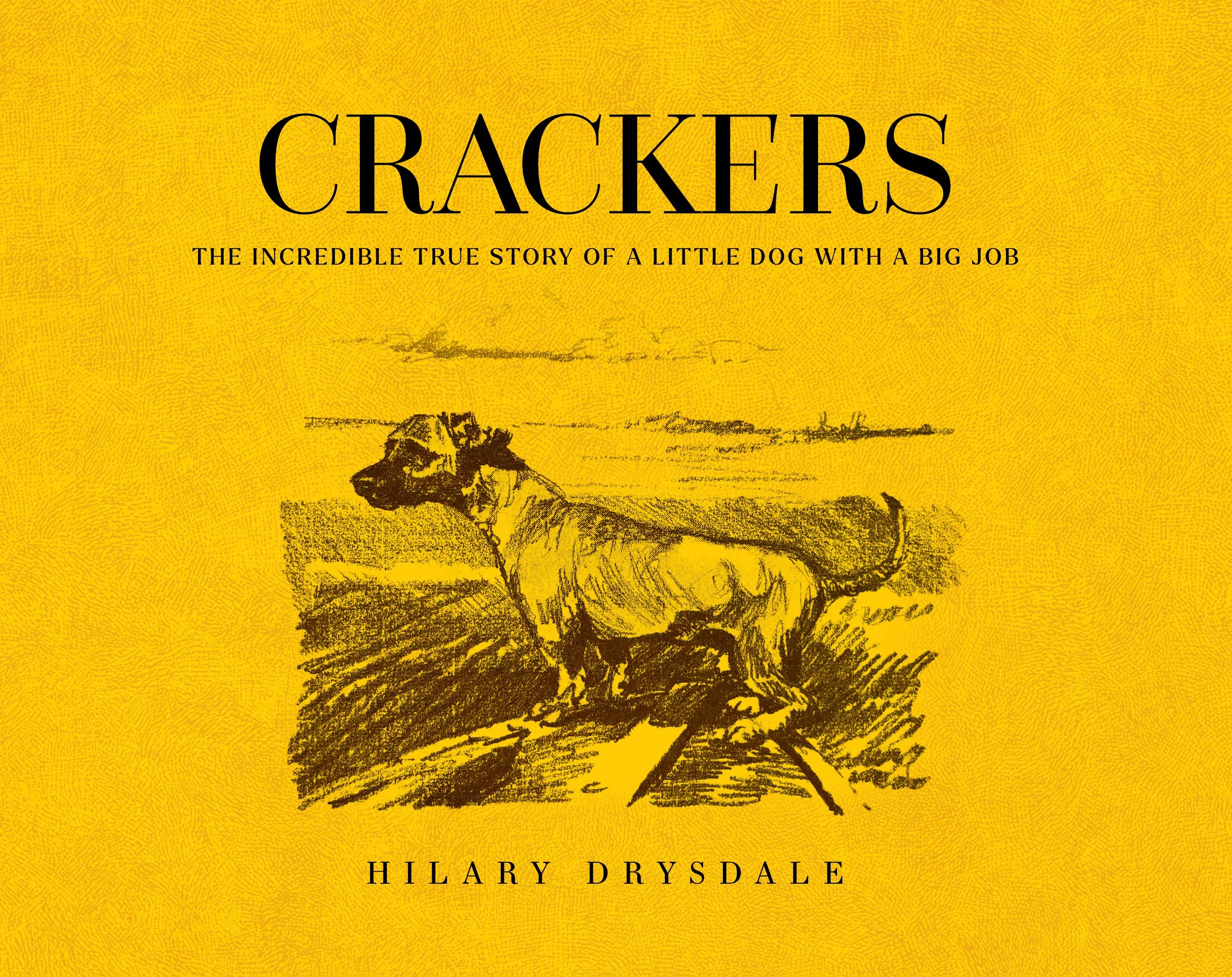
Some interesting news from Kirsten Drysdale, part of the team that put together Crackers, the fascinating true story of a small dog with a highly unusual talent: wrangling pretty much any species of African wild animal…
“I recently engaged Luke to design a book I wrote about Crackers, an adventurous little dog who was the hero of "Operation Noah" - an incredible wildlife rescue operation that took place in Zimbabwe in the 1950s/60s. I was a child in Zimbabwe at the time, but my father, Rupert Fothergill, was the country's head game ranger and led the operation, so I had access to the valuable historical material and memories which support this true story. Luke did a fantastic job helping us pull the book together and present it beautifully.
On a recent trip back to Zimbabwe I was able to distribute a number of hard copy books to friends, relatives and Safari Lodges. I have received an overwhelmingly positive response to the book, and have been reflecting on some of the lovely comments I have received.
Kathy said:
Hi Hils - oh my goodness- I’ve just read your book & just LOVE It! Sure did get the emotions going! Such brave men doing so much good (& of course Crackers!) And of course not to forget the amazing wives & families back home keeping the home fires burning so that the men could do their jobs knowing their families were in good & safe hands. Kudos to them too! Very strong & resilient woman. Thank you sooo much Hils. The book has pride of place on my coffee table.
Julia sent me photos of her son reading it to her grandchildren and said they loved it.
Shayne said she and her 90 year old mum couldn’t put it down.
Mags said she was going to find a film producer to make a movie out of it.
I have had lots of people ask if they can sell them for me and am in the process of hopefully getting some printed in Zimbabwe for them to have easier access.”
Crackers is available in hardcover.
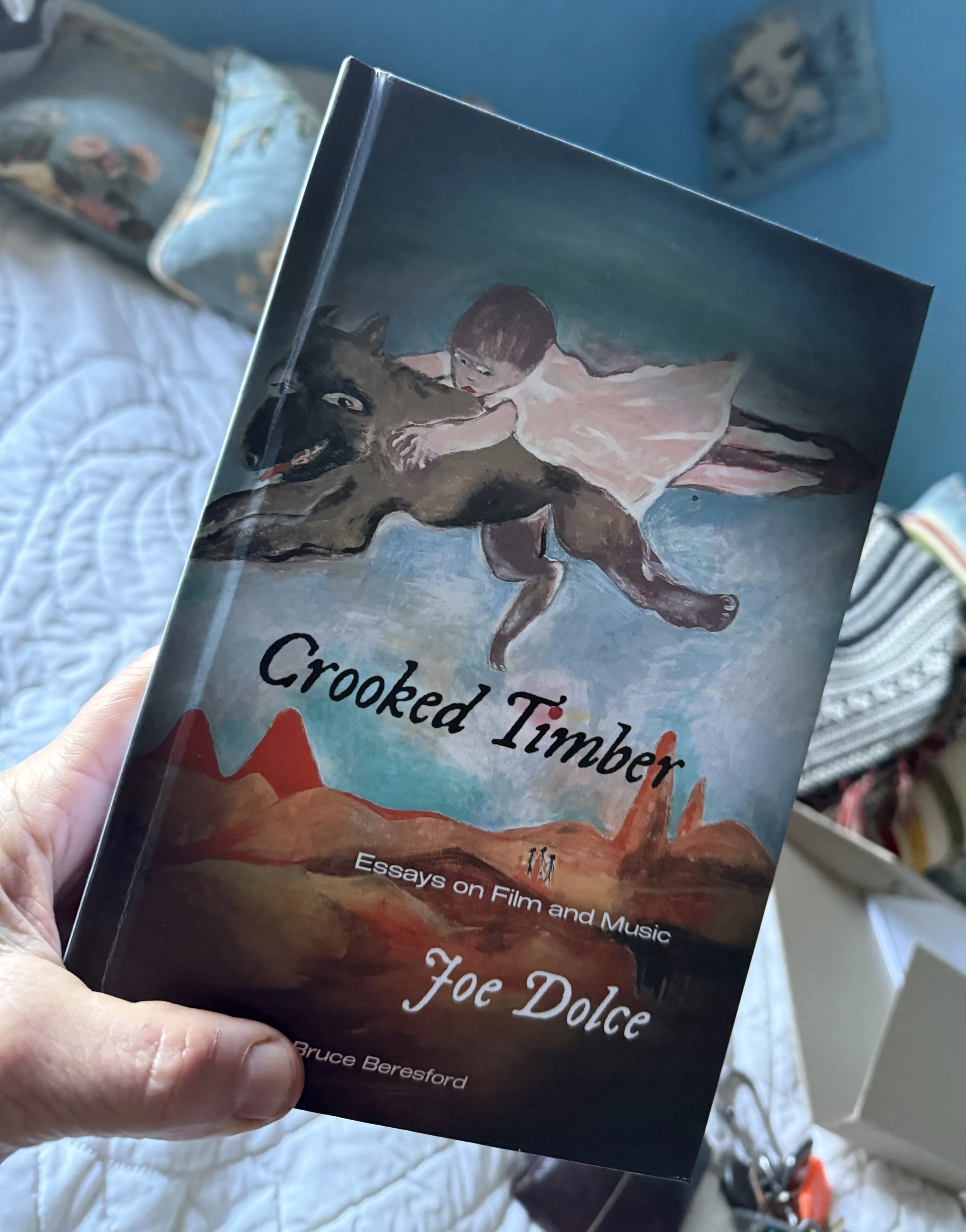
Crooked Timber: An Excellent Book of Essays from Joe Dolce
Besides pursuing a long and successful musical career, Joe Dolce is also an exceptionally good reviewer and essay writer. Crooked Timber is due for release on 1 August, containing dozens of intelligent and eclectic pieces. Whatever the topic, he tackles it from unexpected directions, with good humour and deep curiosity, and the reader leaves with much to ponder and a fund of new knowledge. From The Queen’s Gambit to the voyages of Captain Cook, the invention of the Kalashnikov to utopian settlements in Paraguay and Bob Dylan to Graham Greene, there isn’t a boring page in his book. He’s even thrown in a diverting short story exploring a strange after-life for Elvis Presley.
We worked with Joe on the cover design (artwork by Lin Van Hek) and the interior layout. with images of the hardback cover below.
Crooked Timber: Essays on Film and Music
ISBN (hardback): 9781764139427
ebook: 9781764139458
Published by Quadrant Books

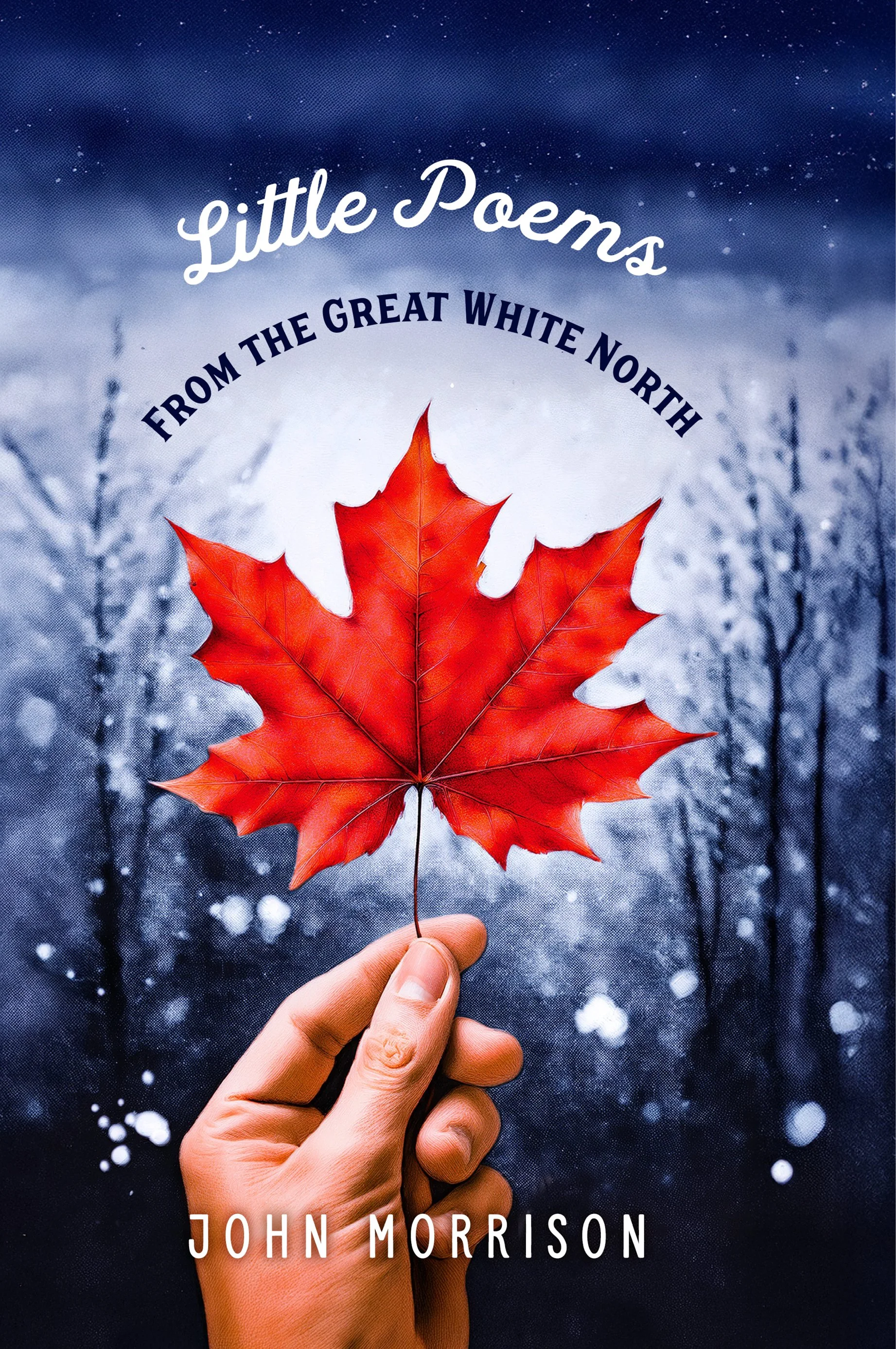
Recent Book covers episode 1,001...
The usual variety of topics, colour schemes and typefaces…


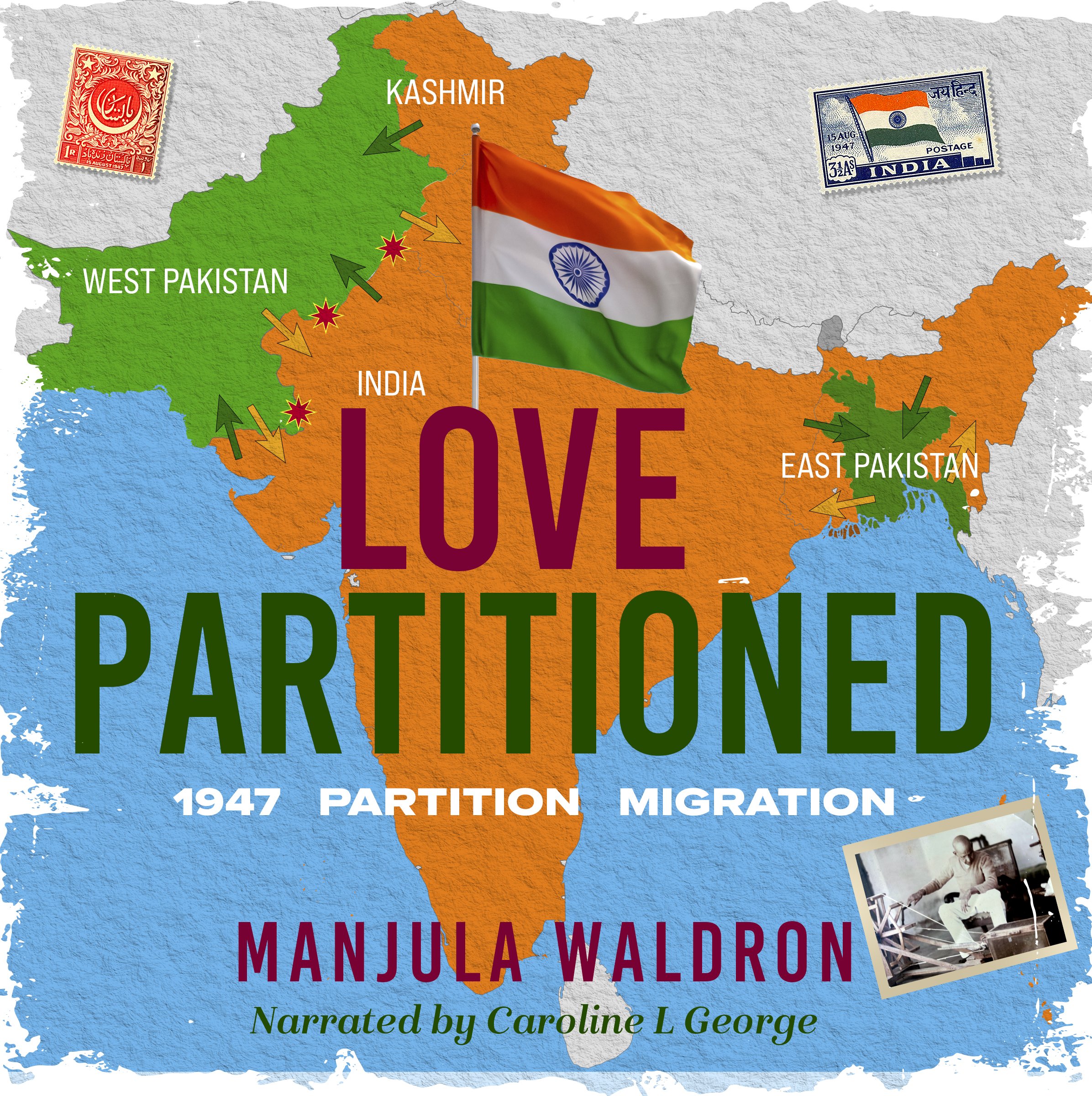
Recent Cover Designs
Recent cover designs, from High Fantasy to Colonial History, Real Estate to Middle Eastern Politics




The Typical Costs of Each Stage in the Publishing Process

Becoming a published author can be an expensive endeavour with little monetary rewards, at least initially. Once writers have a number of books published, the royalties increase. The lucky few get a contract and a small advance from a publishing house. Looking at the expenditures during each stage of writing, designing a cover, formatting the interior, and marketing gives wordsmiths insight into the expense of breaking into the business.
Cost for Each Stage of the Publishing Process
Online forums and blog posts offering advice about jobs to get into on a shoestring cite writing as an option. While it can be fairly inexpensive to jump in if one already owns a computer, there are fees to consider. How much money one makes on each project varies widely.
An Authors Guild survey indicated full-time novelists earn a median income of $20,000 per year, while part-time ones earn significantly less. New writers must factor in a variety of expenses to consider how much they actually earn.
Writing the Story
If the writer already owns a computer, pricing is significantly lower to get started. Some Chromebooks typically run under $300 and will serve the basic needs of having a Word Processing program and the ability to send email inquiries to publishers or upload the book to an online portal.
Many options exist for processing programs, but Microsoft Word is one popular option. Authors will need a Microsoft 365 $99.99 per year subscription to use the desktop version of the software.
Wordsmiths must consider the time it takes to finish a tale. People could spend the same hours on a side hustle instead of writing, so unsuccessful books are the same as lost potential income. Writers should weigh the pros and cons. One rule of thumb is that if the person can stand to not write, then they should do something else. If stories take over their thinking, the individual should go ahead and write them but understand profit is fickle.
Editing is crucial for an acclaimed story. While free software like Hemingway exists, for a better editing process, invest in Grammarly or one of its counterparts. Many authors pay a professional editor per page for at least a quick proofread, which can add up to hundreds of dollars per novel.
Formatting the Interior
Formatters must lay out the inside of the book in a particular way to grab the attention of an editor or for self-publishing on sites like Amazon, IngramSpark and Draft2Digital. A new writer will either pay someone for this service or learn how to format on their own by viewing YouTube videos and trial and error.
The price of formatting an interior depends on the number of pages and how many images are inside. Adding elements such as print versions increases the fee. More experienced designers also charge more.
Authors should consider how and where they'll publish, as the number of pages and thickness can impact the overall page count. Even the type of paper can make a difference in printing costs — for example, while nearly half of U.S. and U.K. consumers feel sustainable materials are crucial, these materials can rack up costs more quickly than traditional paper. Though, these extra costs may be at least partially offset by giving creators an edge with eco-conscious readers.
Designing a Cover
As with other aspects of a new release, the expense of commissioning a cover for a book varies. Artists may charge little for a premade cover but up to hundreds of dollars for a custom design. The more eye-catching ones belong to in-demand designers, who charge a premium for their services.
For a self-published ebook, using a service to make a design can save money. However, print versions are more complex and typically require expertise to get the sizing and layout correct.
Publishing Costs
How much a person spends to release their product depends on whether selecting a traditional publisher, assisted publishing or self-publish. For ebooks, expenses are lower.
Traditional Publisher: It pays the creator, either in royalties or a small advance that can pay royalties after the author sells enough copies to match the advance. The publisher pays for the cover art, formatting, editing and partial marketing.
Assisted Publishing: The company charges for a print run, which is typically thousands of dollars and may promise to market it. The project usually does not earn enough to be profitable. However, for someone who wants to get their memoir out or a business book, it can be a quick way to market with a professional end product.
Self-Publishing: The DIY option takes only time and effort to upload the finished work, assuming the author already paid for formatting and a cover. The writer keeps a higher percentage of royalties and maintains full control.
Publishing costs, like most things when launching a book into the world, vary significantly. Finding the right range takes dedication and practice.
Marketing
Whether traditionally or self-published, wordsmiths must create a budget for marketing. Costs to run a newsletter list, take out ads on Amazon and social media and participate in events add up. With around 151,200 authors and writers in the U.S., having a way to reach new readers is crucial. Add the expenses of maintaining an online presence, such as a website, to the marketing budget.
Costs Versus Rewards of Publishing
Many writers create books for the love of the craft. Whether the work ever turns a profit is a lesser consideration for them. Others love to pen novels and also want to make a living. Finding the right mix between spending and profit requires dedication. Getting into publishing requires at least some money. Being aware of the different possible expenses allows writers to make an informed decision about how much time they spend writing and how they release the book.
Article contributed by Eleanor Heck. Eleanor is a design expert for Designerly Magazine, where she keeps readers up to date with the latest WordPress and publishing trends.
East Wind, West Wind: The Books of Trevor Hay
Working Type Books has worked on several titles for Trevor Hay. Here’s an interesting summary of his varied career and writing, many of which are available from Australian Scholarly Publishing.
About the Author

Dr Trevor Hay is a scholar of comparative and intercultural literature, specialising in Chinese theatre, literature and folklore and in English language writing on China. He is a collector of antiquarian books about China, Central Asia and Tibet and has travelled and worked intermittently in China over fifty years, including a period of UNICEF literacy consultancy with ethnic minority groups, and most recently with a Chinese-Australian group researching Buddhist art in the Dunhuang caves of the Gobi. He has been an Australian Research Council researcher on the teaching of Chinese language and culture for international students and has worked with Chinese community arts and culture groups in Australia, including as narrative consultant for a historical drama society and as an expert committee member for an association for the preservation of intangible cultural heritage. He is a fluent speaker of Modern Standard Mandarin. He is currently writing his twelfth book.
Books by Trevor Hay
Tartar City Woman: Scenes from the Life of Wang Hsin-Ping, Former Citizen of China, Melbourne University Press, 1990, biography, history.
East Wind, West Wind, (with Fang Xiangshu) Penguin, 1992, biography.
Black Ice : A Story of Modern China, Trevor Hay, (with Fang Xiangshu), Indra Publishing, 1997, novel, historical fiction.
China’s Proletarian Myth: The Revolutionary Narrative and Model Theatre of the Cultural Revolution, Lambert Academic Publishing, 2008, Chinese theatre and politics.
A Dream of Red Dragonflies. A Strange Tale of China, the World — and a Third Place, Tantanoola, Australian Scholarly Publishing, 2016, novel.
Letters from a Floating Life, Tantanoola, Australian Scholarly Publishing, 2017, novel.
The Secret of the Lunar Rainbow, Tantanoola, Australian Scholarly Publishing, 2018, novel.
Redgrave’s Ghost, Tantanoola, Australian Scholarly Publishing, 2019, novel.
The Tengu: Tales from the Temple of Ordinary Terrors, Tantanoola, Australian Scholarly Publishing, novel, 2020.
The Library of Lost Horizons. An Antiquarian Voyage, Arden, Australian Scholarly Publishing, 2023.
The Man who Loved Dragons. My China Curios and the Gates of Dreams, Arden, Australian Scholarly Publishing, 2024.
Edge Printing Design by Selina Fenech

Illustrator and writer Selena Fenech is offering an interesting embellishment technique for authors (see image above)
“Popular paper edge design accessible for indie authors! With this technique, designs are printed into the page formatting, not sprayed after printing. Can be applied to any print on demand title in black and white or colour. BYO design or custom illustration available.”
Recent cover designs
Memoirs, Genre Fiction, Current Affairs, Science Fiction and Business: always plenty of variety and interest in the world of cover design. Here are some recent examples designed for our clients.



Writing a Simple Design Brief
A good cover design brief should include the following elements (along with any additional information you might consider important for the designer to know)
What your aims are for the book
What place it will occupy in the book publishing landscape (ie. subject matter, genre etc)
The kind of feel or mood you would like the design to inspire or provoke. Give examples of existing titles – as many as you want, and what you found compelling about them – or other non-book material that is heading in the right direction – a ‘mood board’ can be quite helpful
A rough idea of how you plan to market your book, and whether it will be mostly promoted online or via bookstores, and what kind of additional marketing materials will be needed (posters, graphics for social posts, email headers, banners etc)
Examples of type design or font combinations that might set the designer on the right path
Examples of colour combinations, or the dominant colour
The blurb and a reasonably detailed synopsis, even a couple of key scenes in the book if you want them to be the basis of the cover
Character descriptions if they are to feature on the cover
Many authors are content to leave everything to the designer, but at least a little bit of guidance can be extremely helpful and prevent wasted time and the designer creating iterations that are wildly off-track.
Be open to unexpected solutions – sometimes a designer will come up with a solution that you might not have considered and showcases your title in an interesting, marketable way.
If the first round of cover versions are not hitting the mark, be specific with your suggestions – the more the designer has to work with, the more chance they have of creating something memorable and useful
There is a post on the WorkingType blog that goes into some related detail.
A Realm of Superheroes with Alisa Beagley

Alisa Beagley writes and illustrates action-packed books set in a world of superheroes and supervillains. Her latest book, Clash of the Powers is out soon and follows on from Captives of the Killer and Second Chances.
Alisa promotes and sells her books via her well-designed and informative website.
Visual Storytelling for Authors

How to Engage Readers Through Graphics and Design
Eleanor Hecks discusses the importance of graphic design in enhancing the reader experience:
Authors live in an age where attention spans are dwindling and competition for readers is fiercer than ever. Today, readers crave stories that capture their imagination while captivating their senses.
For writers and book designers, this is where visuals become a must-have tool for deepening engagement and enhancing the storytelling experience. Whether through a book cover or carefully crafted book opener, graphics and design can amplify a narrative’s impact, making it linger long after the final page.
What Visual Storytelling Is and Why It Matters
Visual storytelling is the art of conveying a narrative through images, typography and design. It goes beyond the written work, enhancing a story’s emotional impact and immersing readers in its world. For authors, visual storytelling is the connection between content and experience. It creates a richer, more engaging passage for readers.
In publishing today, this system has become increasingly important. Consider that publishers and independent authors sold over 767 million print books in 2023. When you factor in e-books, the figure climbs even higher. With so many options available, authors must find ways to stand out, and designs are one way to achieve that.
Visual storytelling is crucial because it fits the human brain’s natural preference for visuals. Humans prefer graphics over text because of a phenomenon called picture superiority, which psychologist Allan Paivio studied. According to Paivio’s dual coding theory, humans store visuals in two ways — as an image and as a word or phrase that describes the image.
In contrast, humans only store words as verbal representations. This means images are inherently more memorable, making visual storytelling better for capturing and holding readers’ attention. By integrating visuals into books, authors can create more relatable narratives on multiple levels.
Key Components of Visuals in Books
When adding images to content, authors create an experience that complements and enhances the narrative. Understanding the key components of graphics can create lasting impressions on readers. Success depends on the type of experience created, as 80% of consumers now consider it to be just as important as the quality of the product when making future purchasing decisions.
To give readers what they want, the visuals must contain various components, including:
Typography
Illustrations and graphics
Color theory
Layout and white space
Cover design
Carefully combining each of these elements enables writers to produce books that are visually appealing and emotionally impactful.
How Authors Incorporate Graphics and Design
Today's authors find creative ways to weave graphics and design into their storytelling, making books more dynamic and engaging. In fiction, many successful authors add maps to orient readers in complex fantasy worlds or use character illustrations to breathe life into protagonists.
In nonfiction, authors leverage images like infographics, charts and diagrams to simplify complex ideas and present data in a digestible format. For memoirs and biographies, authors typically include personal photos or handwritten notes to add authenticity and emotional resonance. By incorporating visuals strategically, they can enhance the reader’s connection to the content while making their books distinctive.
Ways to Engage Readers Through Graphics and Design
The following strategies offer ideas for authors and designers to use graphics and design elements to captivate readers.
1. Leverage Beautifully Illustrated Covers
An evocative cover is a great way to capture potential readers at first glance. The new Game of Thrones covers’ design perfectly exemplifies this. The series “A Song of Ice and Fire” uses traditional linocut art to create intrigue about the world the reader is about to enter. The covers perfectly capture Westeros and the danger that lurks within it, garnering attention and setting the tone for the epic narratives.
2. Design Immersive Chapter Openers
Whimsical chapter headers or illustrations can provide readers with visual cues. Such elements offer a glimpse into upcoming events, building anticipation and enriching the storytelling experience.
3. Add Visual Easter Eggs
Inconspicuous visual elements that follow the story’s plot or characters can delight attentive readers. These hidden gems encourage deeper engagement, as readers feel rewarded for their attention to detail.
4. Use Pull Quotes and Decorative Elements
Impactful lines with elegant designs draw the reader’s eye to significant moments. This technique spotlights key passages, amplifying their emotional connection and making them more memorable.
5. Experiment With Text Layouts
Creative typography can accentuate pivotal moments or emotions within the narrative. Authors can deliver intensity, urgency or tranquility by varying text placement and style, adding another dimension to the reading experience.
Turning Stories into Immersive Reading Experiences
Authors must use visual storytelling through graphics and design to connect with today’s readers. Visual storytelling elevates a book from a story to an unforgettable reading experience. As readers increasingly value the experience a book provides, investing in visual storytelling is a strategic creative choice. Start experimenting with visuals to convert stories into ones that readers will cherish.
Eleanor Hecks is a writer and web designer who is passionate about helping other writers grow their online presence. Her work can be found on her site Designerly, as well as publications such as IndependentPublishing.com and I Need a Book Cover.
Three Books in One...
Author client G.W. Lucke asked us to find a way to typeset his recent Relevation Trilogy into one single massive volume (1000+ pages). It was a challenge, but we got there in the end, and the illustrations he commissioned for this special edition look great! The hardcover pictured below was printed by Ingram Spark. Check out the width of the spine — only just short of the maximum allowed.