

Can an AI be a useful tool for authors, or a crutch that prevents an author from using their own judgement and enhancing their writing skills. Can AI give us agency, or rob us of it? No doubt the answer is both or either. Independent author expert Joanne Penn raises this interesting topic, with the assistance of Grok, the resident AI on X. I suspect the main problem will be (or already is) the absolute tidal wave of AI enabled and initiated content that will wash through the publishing world, much of which will be complete forgettable rubbish. The desire of most readers to read stories about humans for humans may be a difficult one to satisfy. Amplifying the already near-infinite supply of content will not assist with the long-term problem of declining readership. With many people welded to their phones and compulsively watching extremely short-form videos, the sight of a person reading an actual book or even an e-reader is rare enough to be remarkable.
Web Vision Solutions -- online marketing for Authors

Independent authors often lack a plan for promoting their books and author brand online. Vanity Press publishers and others charge exorbitant fees for very uncertain results in this space. We approached local online marketing expert Ilana van Geijn and asked her if she could put together some affordable marketing packages designed for authors. She obliged and the results were as follows, with the associated introduction:
At Web Vision Solutions, we’ve been assisting our clients for over 10 years to create and establish a strong online presence to enhance brand recognition, elevate business and personal profiles, and drive sales of services and/or products.
As authors, we understand your specific needs. Our Book Marketing Professional team member has over 15 years experience, and teamed with my passion of creating and enhancing clients' online businesses, we combine our knowledge to craft a tailored strategy for you as an author. With a proven track record of collaborating with self published, traditionally published, USA Today and New York Times Best-Selling Authors, as well as small publishers, we ensure that every project we undertake meets the highest standards.
Ilana van Geijn
Founder, Web Vision Solutions
Some of the packages available are:
Book Launch and Marketing Strategy Packages — full and half
Amazon Publishing Package
NetGalley Promotion
Information For Ingram Spark Users
Websites, Social Media & More...
The full document can be downloaded here.
To get in touch with Web Vision Solutions:
To book in for a Discovery Call with Ilana, please click here.
Alternatively, please email us at info@webvisionsolutions.com and we will
connect with you within 24-48 hours.
5 of the Best Site Design Tools for an Effective Online Author Presence

Guest Contributor: Eleanor Hecks
Grabbing readers’ attention in a crowded publishing marketspace grows more complex with each passing year. Authors must get their work in front of a target audience via various channels, such as social media, online groups, newsletters and websites. Ensuring the site is a stellar example of the writer’s brand helps drive engagement and develop a lasting reader/writer relationship.
Developing an online presence that attracts ideal readers means maintaining brand consistency across all those channels and especially websites, which serve as a writer’s home base. Fortunately, many site design tools are available that are simple to use, even without coding knowledge, and will give an author’s site a professional look.
1. Shopify
Shopify boasts over 4.5 million live stores in more than 170 countries. The platform’s flexibility makes it popular with people who want to sell their products online. Many authors have griped on group forums about Amazon’s stranglehold on electronic publishing. They have been at the retail giant’s mercy if they want to accept ebook returns or judge pages on Kindle Unlimited reads as being fraudulent.
In recent years, experts have pushed authors to go wide and sell books on various sites to avoid putting all their eggs into one basket. Shopify makes the process simpler.
2. Wix
For authors who aren’t very techy, adding a site through Wix is simple. They can even take out a domain name and attach it to their pages. However, users should be aware of a few limitations with third-party sites, such as the upgrade fees and cookie-cutter designs.
While authors can customize Wix designs, they still look the same. Creative people often see repetition as a drawback. Still, if a writer needs a quick and easy way to get the word out about books, Wix is an excellent solution.
3. Facebook Page
Today’s published authors sometimes forgo the traditional website and select a Facebook page as their main means of communication with readers. They can even point a domain name to the page if they’d like, update it with photos and videos, and engage directly with their followers.
Researchers found that 76% of consumers plan to keep buying from brands they feel more connected to. By keeping up with a social media site, writers can simultaneously keep up with comments and share personal information that fosters connection with their readers.
4. Ucraft
Similar to sites such as Squarespace and Wix, Ucraft offers another option for authors wanting to get online quickly and establish their presence. One thing a lot of people like about the design platform is that users can sell their products in over 100 markets. Also, buyers can pay in multiple ways, including crypto, PayPal, Square and Stripe.
Ucraft offers templates that users can customize with their images and text. Writers can also create downloads of their products so people can pay and gain instant access to the book. A website can look professional when combined with design tools like Canva, Book Brush and Adobe Creative Cloud for unique images.
5. WordPress
Experts estimate there are around 151,200 authors and writers in the United States. Selecting the perfect platform and theme to showcase talent is challenging. Although prebuilt sites offer convenience, they might not give the level of customization required to truly stand out.
Another option is to lease hosting space through a shared provider, install a WordPress content management system (CMS) on the site and design something unique. Authors may want to work alongside a designer for a custom solution, but using WP to post unique content is as easy as tapping into Google Docs or Microsoft Word.
Writers can choose a free theme on WordPress.org, pay to license a professionally designed theme or work with a designer to customize the site’s look, colors and layout.
Why a Website?
A website is a bridge that connects readers and authors, driving engagement and loyalty. Writers who want raving fans who buy every book they release must work to communicate with them through storytelling, chats and interactive elements on their sites. Authors should look at their websites and digital footprint, which share the tale of who they are and where they're going. Hopefully, book sales follow along and show the connection between authors and readers.
About the Author

Eleanor Hecks is a writer and web designer who is passionate about helping other writers grow their online presence. Her work can be found on her site Designerly, as well as publications such as IndependentPublishing.com and I Need a Book Cover.
Graphic Design tools

From UPrint, some useful tools for estimating font sizes and visibility on printed products, including banners, labels, business cards and file sizes in pixels.
Banner Font Size Tool - https://www.uprinting.com/banner-font-sizes.html - Our tool to help you gauge font size and distance
Best Resolution for Printing: What is My File Size in Pixels? - https://www.uprinting.com/resolution-and-file-size-for-printing.html Our tool can help determine the best file size for your design and produce the best print resolution.
Stickers and Labels Font Size https://www.uprinting.com/blog/stickers-labels-font-size/ - Our Sticker and Labels Font Size Tool will help you visualize different font sizes and styles on various objects and shapes, making it easy to design effectively.
Business Cards Font Size Tool https://www.uprinting.com/blog/business-cards-font-size/ - Choosing the right font size for your business card is crucial for creating a professional and readable design.
Appallingly Amazing -- AI LLMs are moving into startling new areas...

An interesting account of an AI parsing a review and then composing a coherent audio discussion about the review, all in seconds. It starts like this:
“The first thing I pulled off my desktop for Todd was a review I wrote about a Bob Dylan documentary film, which originally ran on Design Observer in 2022. Off it went, and I went back to work. No more than 10 minutes later I received an email with a sound file. Rather than edit or rewrite my text, the AI used the content as the basis for an “original” podcast featuring two perfectly normal generative voices talking about Dylan in their own terms, but seen through my eyes (or words). It was a perfect simulacrum.”
and ends like this:
With natural voices, interplay, hesitations and more.
I’ve heard it said that most traffic on the Internet is already bots talking to other bots. It is now so easy to produce entirely synthetic material, surely AI enabled material will soon constitute the overwhelming majority of all online content, and it is happening so very fast…
Playing Cards at the Poles

Recently we were commissioned to design a set of playing cards featuring legendary Antarctic explorers. The card set was well received and they have made their way to surprising locations at extreme north and south…
Per my client Lewis Levitz:
I received this letter from Sarah.
Our cards are now being sold at a camp in Antarctica and also in Svalbard
Kind regards
Lewis
They have also been used to while away the time during flights over the Antarctic ice cap.

Three Books in One...
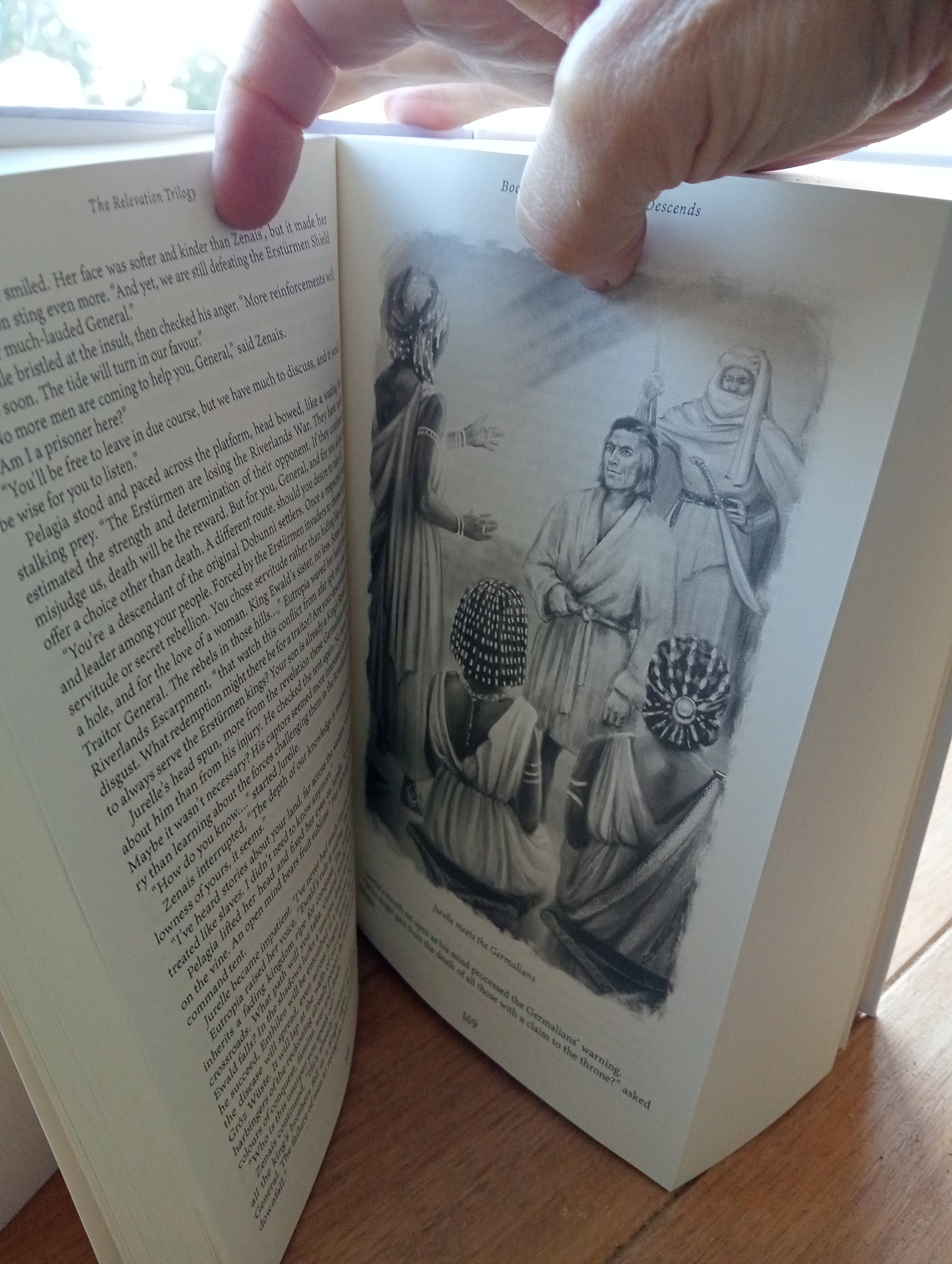
Author client G.W. Lucke asked us to find a way to typeset his recent Relevation Trilogy into one single massive volume (1000+ pages). It was a challenge, but we got there in the end, and the illustrations he commissioned for this special edition look great! The hardcover pictured below was printed by Ingram Spark. Check out the width of the spine — only just short of the maximum allowed.


Recent cover designs
Book design is usually characterised by an extreme diversity of subject matter, and this batch of recent designs is no exception to that general rule…[


Advice to Myself That I do not Necessarily Take

An acquaintance recently asked me to write some advice for her just-staring-out graphic designer daughter. This was my take, and I am not sure how good it is, or if I missed something important.
Make sure you put aside at least one quarter to one third of incoming payments to cover future tax / GST obligations. Super important to do this from the beginning, or you will be forever in the stressful position of playing catch-up.
Consider operating as a company – there are some tax advantages to this, but also more paperwork and accounting expenses. And you will have to pay the state workplace insurance fee each year, which has jumped to almost 1K per year.
Referrals are very, very useful, and they keep working for years. The bigger your network of contacts, the more chances that new jobs keep coming up. A client is much more likely to accept a quote from a business to whom they have been referred. You are in a sense a known quantity to them
Every author is a potential source of future work. It may be years in the future, but an author often writes a second or third title – if they had a good experience with you, they will come back. I have found it good practice to keep in touch with them by emailing newsletters with useful information for authors, new tools, author news etc.
Keep every testimonial / positive review you receive. Post them to your website, and ask satisfied customers to leave reviews on your google profile
Consider joining the Australian Book Designers Association or the Small Press Network
Make sure you refer your clients to other trusted suppliers – in your case, to printers, editors, proofreaders, illustrators, photographers etc. They will often repay your referrals in kind and if your clients have a good experience with one of your referrals, your status as a trusted provider will be enhanced. I have heard this referred to as the ‘honest broker’ role, and it is definitely worth aspiring to
Consider finding a compatible business partner or partners. Being a sole practitioner has its benefits, but also costs – difficult to have down time, difficult to grow past a certain point, becoming stuck in the same role, potentially unable to take on very large jobs or multiple large projects. Perhaps your business partner might specialise in web design, or assisting authors online or some other complementary service. There are services like Fiverr that connect you with typesetters, people who run amazon ads, ebook conversion etc, but I have always preferred to work directly with suppliers rather than through a third party. That said, I have found fiverr very useful for performing one off specialist tasks – creating a 3D rendered object, or a bit of specialist accounting
Consider offering a package service – authors or publishers often have several requirements and it is a ‘pain point’ for them to have to juggle multiple contractors to do them – eg. they may want a print version, ebook version, banners and ads, assistance with online advertising, a round of proofreading, an audiobook version etc.
If you prefer to go it solo, then consider employing an assistant as your business grows – either as a contractor or actual employee, remote or in-house.
Book design is easy to do from home / a home office, so it can be very low-cost. However, it can be good to separate home and work, or the latter will tend to take over the former. I had an office for many years, and it definitely had its pluses. My best setup has been a home office, but in a standalone building. So you leave the house to go to work, and when you are in the house, you are not working.
I got my first client by writing to publishers, and doing some occasional work for them, and then some design projects for councils and libraries, then some printers started referring authors to me to get their books set up properly (it is very important to have good contacts with printers) and it rolled on from there. It took a while to build up enough, and I was also working a day job for a few years.
I had to take on as many jobs as possible, as book projects can suddenly halt while the author messes around with proofreading, or runs out of money for a while, etc.
In terms of pricing – I have always tried to be mid-range, to get as many clients as possible and to give very reasonable prices to independent authors. I have seen designers who charge much more than me and obviously put a great deal more work into each project. That’s a valid approach, but my client base would definitely not bear those kinds of costs.
The book industry is changing fast, and who knows where AI is going to go. I already use it a lot for image generation, but it will no doubt get into layout and design as well. Hopefully there will still be plenty space for human-led design.
You will need to be someone who solves a lot of author or publisher problems in the one service, and to be super reliable and personable, thus justifying your rates. Most authors want to deal with a person, and especially to meet up with them and feel they are being listened to.
Producing an Audiobook
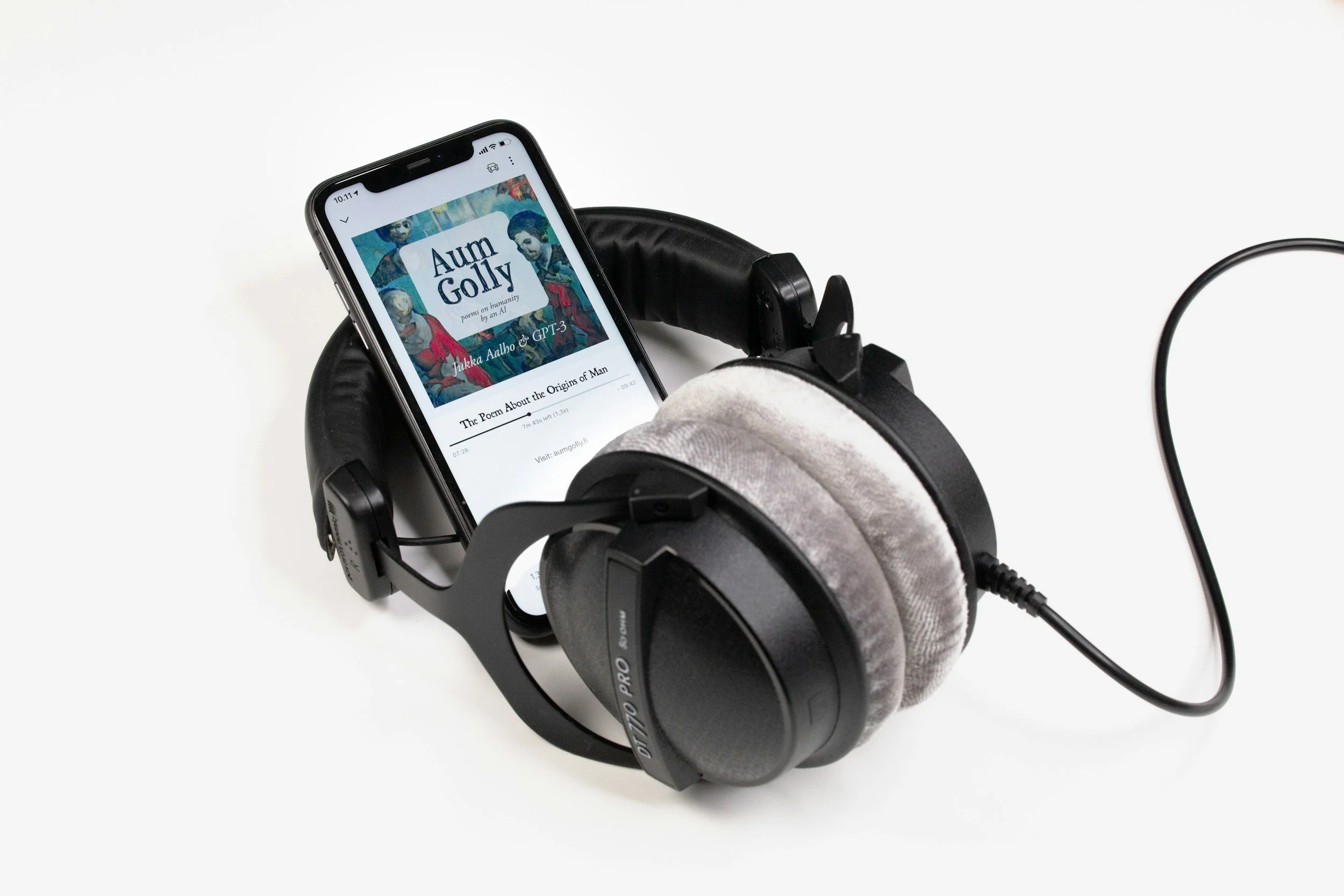
Maria Issaris of Audiobooks Radio is offering an insight into the intricacies and challenges of audiobook production via a zoom session. She says that “Audiobook production is exciting and intense, technical and emotional, all at once. Each production team (and that includes the authors and publishers!) become immersed, experiencing the 'storytelling' version of their work as it emerges from the hard page and onto an audio-platform.”
As a format, the audiobook is experiencing dramatic growth, but the process of producing a compelling audiobook is quite complex and technically challenging. It is great to see some emerging Australian players in this field.
Maria Issaris: “So here we are. We want listeners to have a profound experience when listening to audiobooks. We developed cost-effective, absolutely high quality, global standard audiobook production for small publishers and individual authors. We want books to be disseminated on global platforms. We don't take royalties. audiobookradio uploads and cross‑promotes, but does not collect royalties, nor charge ongoing fees.And we love it!”
Draft2Digital: a good idea for independent authors?

Draft2Digital offers a very cost-effective distribution route for ebooks (print on demand also, but that service is still in beta, for various reasons). Its sale channels cover all of the large ebook retailers. It has a very simple and attractive service proposition:
We are Self-Publishing with Support. Your book is your priority. Our priority is you. We build tools and services that let you focus on writing while we take care of layout, publishing, distribution, print-on-demand paperbacks, and more. Keep writing. We’re here for the rest.
In a long and very informative blog post, author services firm Reedsy describes them as “The gold standard for self-publishing aggregators, Draft2Digital distinguishes itself with excellent customer service and a user-friendly interface. They’re the best way to sell your book with dozens of retailers without tearing your hair out.”
Kindlepreneur also has a largely positive review that dives into the details of uploading a new title and how the royalty payments and update fees work.
Users discuss vcry specific pros and cons of the service on a reddit thread. Important note: the 10% Draft2Digital fee is charged on retail price, not on profit, and comes on top of the share taken by the end seller.
Writers Weekly has published a number of very negative user reviews that indicate some administrative problems.
Plenty of users had complaints about the non-payment of royalties.
Draft2Digital books cannot access Amazon advertising or other Amazon sales tools.
In summary, a service that will be useful to many authors, but go in with your eyes open and aware of the moderate drawbacks, especially the Amazon advertising issue.
No More Cookies for You (Or Anyone Else)

Google is gunning for cookies — those intrusive and unloved snippets of code that track your browsing habits and transmit said data to unscrupulous marketers. Cookies also allow other bad actors to snoop on your privacy and form a pretty good personality profile of any given web user. But being Google, and living on advertising dollars, they are still going try mightily hard to keep advertisers happy by building in more privacy-friendly settings. One suspects much of this zeal for privacy is driven by the European Union’s much more stringent privacy regulations. Falling afoul of the EU can be an expensive business.
“As we work to make the web more private, we’ll provide businesses with tools to succeed online so that high quality content remains freely accessible — whether that’s news articles, videos, educational information, community sites or other forms of web content. With Tracking Protection, Privacy Sandbox and all of the features we launch in Chrome, we’ll continue to work to create a web that’s more private than ever, and universally accessible to everyone.”
The Library of Lost Horizons by Trevor Hay: a review

Local author and academic Trevor Hay’s book The Library of Lost Horizons has been reviewed at some length in Quadrant magazine (subscription). Two brief excerpts:
“Hay speaks fluent Mandarin and since 1975 has journeyed widely to study Chinese literature,
theatre, and folklore. A compulsive collector, his library holds a multitude of forgotten stories from
travellers along Silk Roads in remotest Asia. In The Library of Lost Horizons, Hay recounts stories
garnered from the many archeologists, ethnographers, scientists, historians, anthropologists, and
inveterate dreamers who passed through deserts and harsh mountain passes to the soaring peaks
and mysterious valleys of Tibet and on to fabled Shangri-la. He adds reflections arising from his own
last trip to Dunhuang and the remarkable ‘Caves of the Thousand Buddhas’ on the edge of the great
Gobi Desert.
”
“Hay was soon captivated by China, a country that haunts him still. As he
notes,’…for nearly fifty years I have been in love with a much older woman. She likes to be called
Han. Sometimes she will answer to Tang’. He continued to be drawn to her languages and cultures
as he collected books ‘in English or in translation about the places that have contributed to the
formation of her character’. The Library of Lost Horizons takes you into the world of these books.”
The Library of Lost Horizons is available from Australian Scholarly Publishing, along with several of Trevor’s other titles.
Rules for Reading

Author Ryan Holiday details his down-to-earth reading habits/strategy.
“If you see a book you want, just buy it. Don’t worry about the price. Reading is not a luxury. It’s not something you splurge on. It’s a necessity. Even if all you get is one life-changing idea from a book, that’s still a pretty good return on investment.”

Music and cultural critic Ted Gioia outlines his lifetime reading plan, and it is very impressive and inspiring.
“When I was 18, I tackled War and Peace. When I was 19, I did Don Quixote. The next year, I read The Brothers Karamazov, and after that it was Moby Dick and The Tale of Genji and The Magic Mountain. And I’ve kept doing this for decades. The cumulative impact of this is life-changing.”
Doing Your Comp Research

Serious independent authors spend time checking out their competitors, the so-called ‘Comps’ or comparable titles. It is a great way of getting a sense of a particular genre, prevalent trends, the key cover design elements that signal a particular fictional niche. A writer should have a good idea of their specific target readers — and, spoiler alert, it is not ‘anyone who can read’. If you have read a lot in the genre you are writing in (always a good idea), you will already have a fairly good idea of how your title/s relate to the existing literary landscape. Making a list of comparable titles, whether bestsellers or midlist, can also be helpful for book cover designers looking to get a more specific feel for your title. At the same time it gives the author a better sense of the overall commercial literary landscape.
IngramSpark Drops Setup Charges But Adds Another Fee
In welcome news, IngramSpark have dropped their excessive new title charges, and also removed revision charges if corrections are made within 60 days. This aligns them better with their competitors at Kindle Direct Publishing. The revision fees were particularly egregious — one of the advantages of Print On Demand is the ability to correct and update when necessary, unlike long print runs, and IngramSpark were effectively penalising people for doing so.
Of course, what one hand giveth, the other hand taketh away — a new ‘Global Distribution Fee’ has been added:
Effective July 1, 2023, a market access fee will be charged for every print book sold through Ingram’s Global Distribution network, reaching 40,000+ bookstores, retailers, libraries, and schools. The fee will be 1% of the list price of the title sold. For example, if your book has a US list price of $20.00, the market access fee will be $0.20 cents.
Value of Book Cover Design
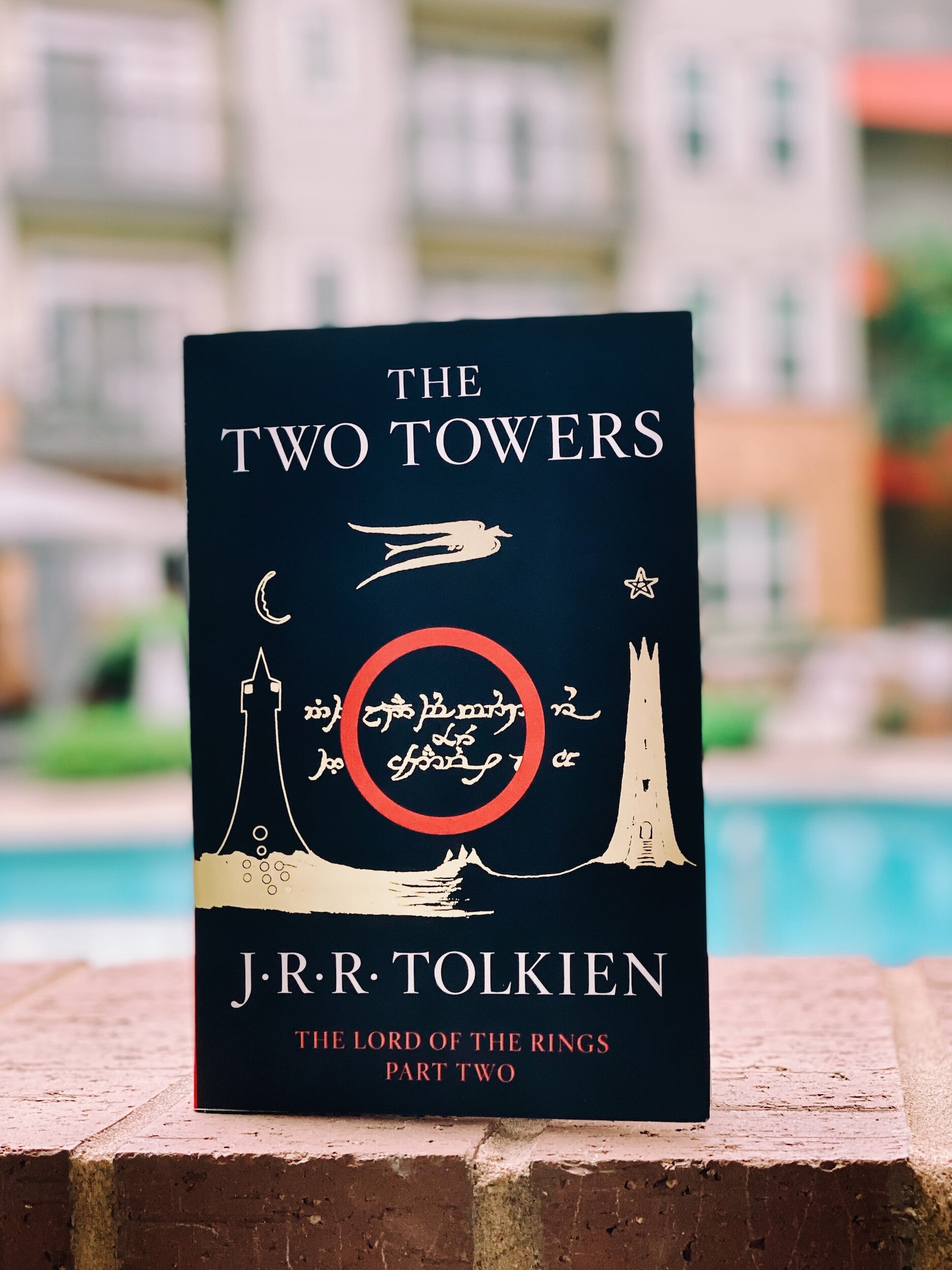
Author services site Reedsy conduct a semi-scientific test into the relative marketing merits of a better designed cover. The signal seems pretty clear, though one would want to make such tests on a much larger scale to fully quantify the effectiveness. But of course there is a reason mainstream publishers invest a lot of effort into eye-catching genre-appropriate cover designs — it very much works, and catches the segment of the buying public interested in that specific kind of title.
Typographic Illusions and Type Design

A very interesting article on the optical illusions that type designers must take into account when designing a new typeface. Written by Jonathan Hoefler, type designer extraordinaire, designer of superstar typefaces such as Gotham, Archer and Sentinel.
Hemingway Award for Kathryn Gauci

Kathryn Gauci writes gripping historical novels set in Europe, with a particular focus on Greece, France and Turkey. She researches her work in great detail, often travelling to the regions in question, and picks up many online awards. She posts regularly on Facebook and Instagram, and has racked up thousands of reviews and ratings on Goodreads. She is an excellent example of the value of persistence, networking, participation in the online communities relating to her genre and cross marketing of her books.
Tips for Building an Effective Website (guest post)
Unveiling the Blueprint: Crucial Tips for Building a Stellar Website

In the dynamic landscape of online presence, building a website that captivates users and performs exceptionally well on search engines is a multifaceted task. The journey from conception to a fully functional website involves strategic planning, technical finesse, and a deep understanding of user behavior. In this comprehensive guide, we'll uncover pivotal tips that will serve as the backbone for constructing a website that not only stands out but also thrives in the digital realm.
1. Strategic Planning: Define Your Purpose and Audience
Before diving into the intricacies of web development, embark on a strategic planning phase. Clearly define the purpose of your website and identify your target audience. This foundational understanding will shape every subsequent decision, from content creation to design aesthetics. Knowing your audience ensures that your website resonates with the right people, leading to enhanced engagement and conversions.
2. Thorough Keyword Research: Fueling SEO Success
Keywords are the building blocks of SEO, and their strategic integration is paramount. Conduct exhaustive keyword research to identify terms and phrases relevant to your niche. Utilize tools such as Google Keyword Planner and SEMrush to uncover search volumes and competition levels. Infuse these keywords organically into your content, meta tags, and headers, providing search engines with valuable context and enhancing your website's discoverability.
3. User-Centric Design: Navigating the Digital Landscape with Ease
User experience (UX) is a critical aspect often underestimated in website development. Craft an intuitive and user-friendly design that facilitates seamless navigation. Prioritize responsive design to ensure a consistent and enjoyable experience across devices. Incorporate clear calls-to-action (CTAs) and minimize clutter, guiding users effortlessly through your digital space.
4. Effective Content Strategy: Quality Over Quantity
Content is the heartbeat of your website, and a strategic content plan is key. Prioritize quality over quantity, delivering information that is valuable, relevant, and engaging. Regularly update your content to reflect industry trends and user needs. Consider incorporating various content formats, including text, images, videos, and infographics, to cater to diverse audience preferences.
5. Optimized Page Speed: Swift Loading for Enhanced User Experience
Page speed is not just a user preference; it's a critical SEO factor. Compress images, leverage browser caching, and minimize code to optimize your website's loading times. Users and search engines alike favor websites that load swiftly, contributing to a positive user experience and improved search rankings.
6. Mobile Responsiveness: Adapting to the Mobile-First Era
In an era dominated by mobile devices, ensuring your website is mobile-responsive is non-negotiable. Google prioritizes mobile-friendly websites in its rankings, making this aspect crucial for SEO success. Choose a responsive design that seamlessly adapts to various screen sizes, providing a consistent and enjoyable experience for users on smartphones and tablets.
7. Technical SEO Best Practices: Lay a Solid Foundation
Mastering the technical aspects of SEO is akin to building a robust foundation for your website's success. Create and submit an XML sitemap to guide search engine crawlers efficiently. Optimize meta titles, descriptions, and headers with relevant keywords. Implement clean and semantic HTML, and ensure your website adheres to best practices for canonicalization to prevent duplicate content issues.
8. Secure Hosting and SSL Certification: Safeguarding Your Digital Presence
Choose a reliable hosting provider to ensure your website remains accessible and performs optimally. Additionally, prioritize security by obtaining an SSL certificate. Secure websites not only instill trust in users but are also favored by search engines, positively impacting your rankings.
9. Regular Monitoring and Maintenance: Keep Your Website in Prime Condition
Building a website is not a one-time task; it requires ongoing monitoring and maintenance. Regularly check for broken links, update content, and ensure that all features are functioning as intended. Conduct periodic SEO audits to identify and address any issues that may arise, ensuring your website stays in peak condition and continues to attract and retain visitors.
Embarking on the journey to build a website is an exciting venture laden with opportunities. By following these crucial tips, you'll be equipped to navigate the complexities of web development with confidence. Remember, a successful website is a dynamic entity that evolves with user needs and industry trends. Stay committed to delivering exceptional user experiences, staying on top of SEO best practices, and consistently refining your digital space. With these tips as your guide, you're well on your way to crafting a website that not only meets but exceeds the expectations of your audience.